
Your cart is empty
Looks like you haven't made your choice yet

Open a news site any given week and you’ll probably see something about psilocybin, the psychoactive compound in magic mushrooms. It shows up in stories about clinical trials, mental health, workplace wellness, and the slow grind of drug policy reform.
If you’ve wondered why fungi that were once pure counterculture fodder are now discussed in medical journals and parliamentary committees, here’s the rundown.
When people talk about a psilocybin “boom,” they usually mean a few overlapping things. First, there’s genuine scientific attention.
Researchers at universities and hospitals in Canada, the United States, and Europe are studying psilocybin-assisted therapy for conditions like treatment-resistant depression, end-of-life distress, and PTSD. The U.S. National Institute on Drug Abuse maintains a research page dedicated to psilocybin, which tells you how mainstream the conversation has become.
Second, there’s public interest. Decades of anecdotal reports, podcast appearances by researchers, and memoir-style journalism have pushed psychedelics out of the fringe and into dinner-table conversation. Celebrities talk about their experiences. Retired athletes do too. Silicon Valley types have been openly discussing microdosing for years.
Third, there’s a commercial layer. As interest grows, companies and small producers have moved into the space, offering everything from guided retreats abroad to microdosing products sold in a legal grey zone. In Canada, that grey zone is real, and it comes up below.
All three booms feed each other, and they don’t always move at the same speed. The research is careful and slow. The culture is fast and loud.
The commerce is somewhere in between, and it sometimes outruns what the science and the law actually support.
It’s worth separating what researchers are actually studying from what gets repeated online. In clinical settings, psilocybin is being investigated as part of a therapy session — a carefully structured experience with a trained guide, screening beforehand, and follow-up support.
That’s a large, intentional dose in a controlled environment, nothing like a tiny amount on a Tuesday morning before work.
The distinction matters because headlines often blur it. A story about a clinical trial for depression gets shared in a microdosing group, and suddenly people assume the study proves that small daily doses cure everything. It doesn’t, and researchers are usually the first to say so.
Early results have been encouraging enough to justify more work, but the field is still young, sample sizes are often small, and long-term data is limited. This isn’t settled science.
Dismissing the whole thing as a fad doesn’t hold up either. There’s too much institutional involvement for that — hospitals, universities, and public health bodies are paying attention, and fads don’t generate peer-reviewed protocols and ethics-board approvals.
The reasonable position is in the middle: real promise, real open questions, and a lot of people filling the gaps with enthusiasm.
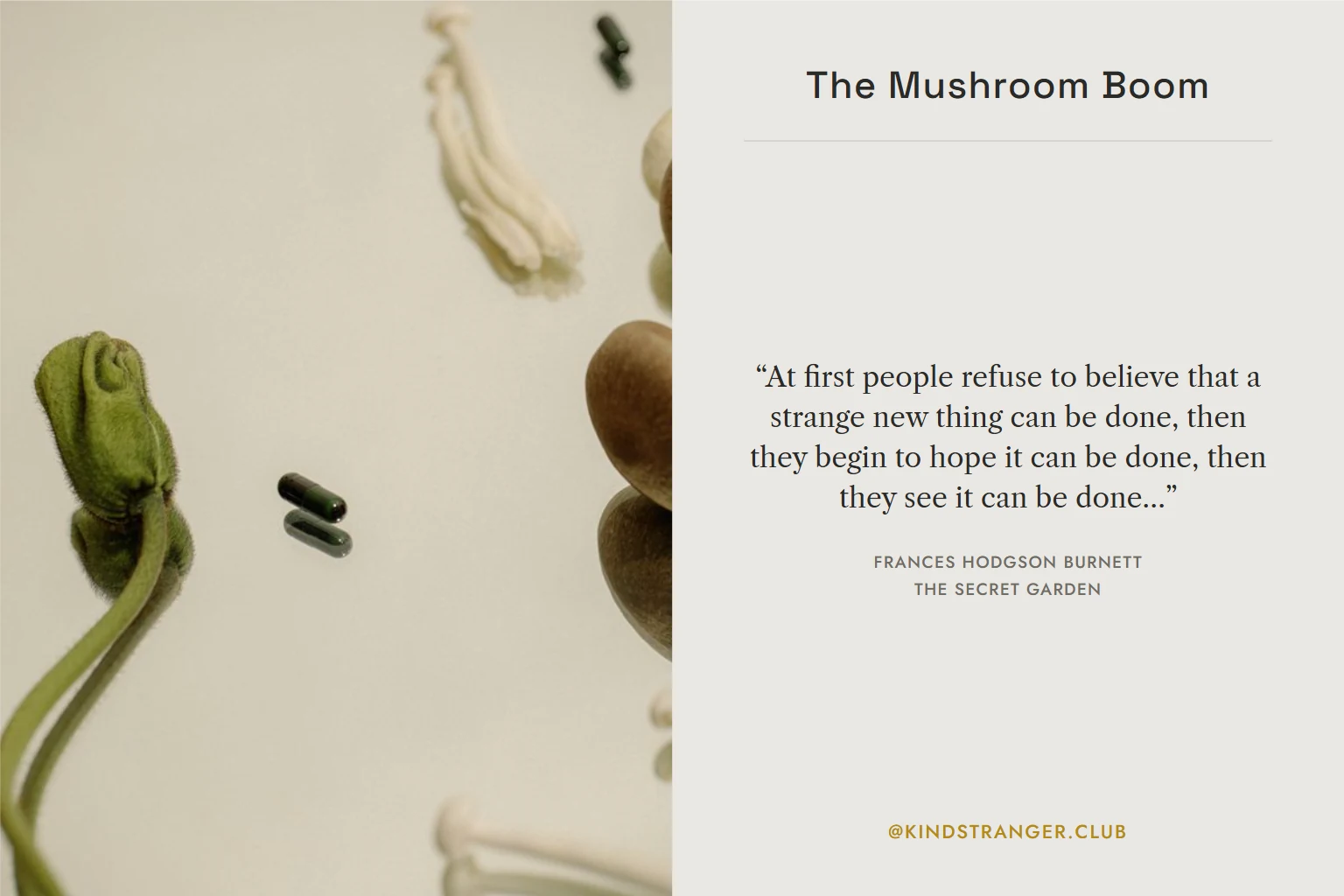
A microdose is a fraction of a recreational dose — small enough that you’re not tripping, small enough that you can go about your day.
People who microdose typically describe it as a subtle shift rather than an event: a little more focus, a little more emotional openness, a slightly better relationship with their own mood. Some take a dose every few days rather than daily, following schedules that communities have worked out over years of trial and error.
A review of 44 microdosing studies found reported benefits for mood and cognition in several of them. People describe a little more focus, a little more ease, and a mood that is easier to live with. Some studies in that review are more neutral, and those belong later in the picture. They sit beside the benefits. They do not replace them.
Here’s the useful part, though. Whether the benefit comes from the psilocybin, the routine, or both, the people who get the most out of microdosing tend to treat it like a practice rather than a pill. They start low.
They keep a simple journal — mood, sleep, focus — so they can actually tell whether it’s doing anything. They take breaks rather than escalating. They pair it with sleep, movement, and reasonable nutrition.
If you’re curious about protocols, our dosing guide covers how people structure their schedules and what to expect in the first few weeks.
And if you’re looking for products designed for different intentions — focus, calm, energy — you can browse the full shop or look at specific blends like Sidekick for focus, Daydream for a calm, flow-state feel, or Passion for energy and drive.
Now the part that matters most for Canadians. Despite everything you read in the news, psilocybin remains a controlled substance in Canada. It’s not legal to sell, and possession outside very narrow exemptions is against the law. Health Canada is blunt about this.
There are limited exceptions. Health Canada has granted some individuals exemptions on compassionate grounds, mostly for end-of-life distress, and there’s a Special Access Program that allows certain healthcare practitioners to request psilocybin therapy for specific patients when conventional treatments haven’t worked.
There’s also ongoing advocacy, some court challenges, and municipal resolutions in places like Vancouver and Toronto asking for enforcement to be deprioritized. None of that adds up to legalization. It adds up to a system under strain, with public opinion and retail reality running ahead of the actual statutes.
We cover the details of how this plays out across the country — including what’s changed, what hasn’t, and what enforcement actually looks like — on our page about psilocybin legality in Canada.
If you take one thing from this section, take this: the headlines describe momentum, not permission. Know the law where you live before you make any decisions.
Why are magic mushrooms in the news so much lately?
Three reasons stack together: credible research into psilocybin for mental health conditions, a cultural shift that’s made psychedelics discussable in mainstream settings, and a commercial surge that’s grown alongside both. Each one feeds the others, so coverage keeps compounding.
Is psilocybin legal in Canada?
No. Psilocybin is a controlled substance under Canadian law, with narrow exceptions like Health Canada’s Special Access Program and rare individual exemptions. Retail operations exist in a grey area, but the law hasn’t changed just because stores have opened.
Is a microdose the same as a therapeutic psilocybin session?
No, and this distinction gets lost constantly. A therapy session involves a full dose in a supervised clinical setting with screening and integration work. A microdose is a much smaller amount taken on an ordinary day, usually on a schedule, without any psychedelic effect. Different idea, different purpose, different evidence base.
Does microdosing actually work, or is it placebo?
Several studies report benefits for mood and focus. Some later findings are more neutral, and expectation can play a part in how a week feels. The reports of a steadier day are still the main result people are chasing, and a simple schedule with a few notes is how you see it in your own week.
What’s the best way to start if I’m curious?
Start lower than you think you need, follow a schedule with rest days, and keep simple notes on your mood, sleep, and focus so you can judge the effects for yourself. Our dosing page walks through common protocols. And make sure you understand the legal situation in your province before you begin.
Could psilocybin become legal for therapy in Canada?
It’s possible, but nobody can promise a timeline. There’s serious research interest, active advocacy, and regulatory pathways that have been used for individual cases. But moving from exemptions and trials to approved therapy is a long process, and it hasn’t happened yet. Watch Health Canada’s announcements rather than headlines promising it’s “just around the corner.”
The short version of all this: magic mushrooms are in the news because something real is happening — in labs, in culture, and in the marketplace — but the pieces aren’t moving at the same pace. The science is promising and unfinished. The cultural shift is well underway. The law is lagging behind both. If you’re going to explore microdosing in Canada, do it with your eyes open on all three fronts: read the actual research, keep realistic expectations, and know exactly where the legal lines are drawn.
Comments
Pingback: MICRODOSING CHAMPIGNONS: BENEFITS, DOSAGES, AND WHAT TO EXPECT - Online Dispensary For Canadians Who Love Cannabis & Magic Mushrooms