Ceremonial Cacao
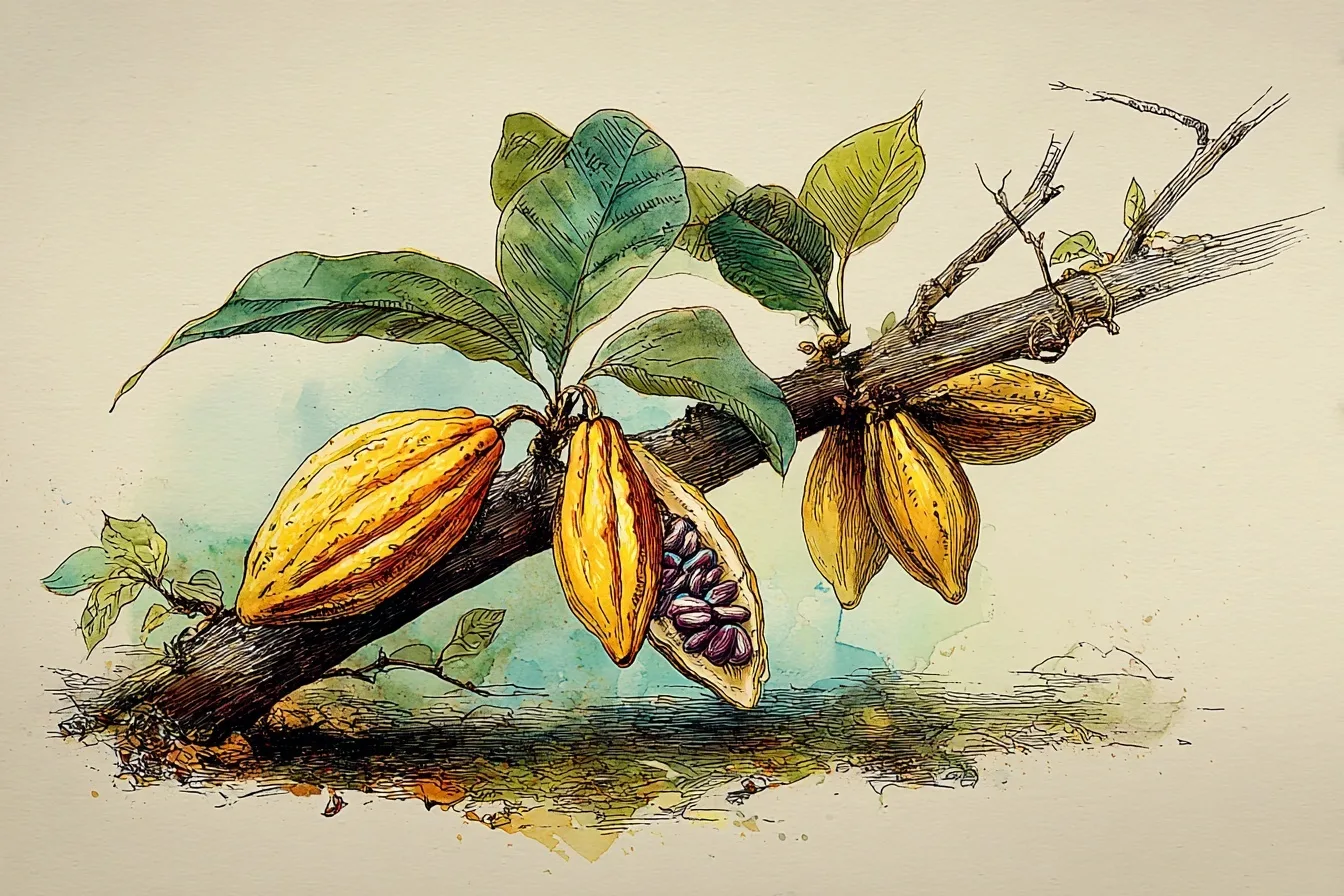
Theobroma cacao
What Is Ceremonial Cacao?
Let’s get something out of the way: this is not hot chocolate. Ceremonial cacao and the Swiss Miss packet in your cupboard share a common ancestor, but somewhere along the way — roughly around the time Europeans added sugar, milk, and alkali processing — the two diverged so completely that comparing them is like comparing grape juice to wine. What you lose in industrial processing is almost everything that makes cacao pharmacologically interesting: the theobromine concentration, the flavanols, the phenylethylamine, the anandamide. What you keep is the flavor, sort of, and the sugar.
Theobroma cacao — the botanical name literally means “food of the gods,” courtesy of Linnaeus, who apparently had a moment of uncharacteristic poetry — is native to the Amazon basin and was domesticated in Mesoamerica at least 3,000 years ago. The Aztecs and Maya didn’t just drink cacao. They revered it. It was currency, medicine, and sacrament. Montezuma reportedly drank fifty cups a day, which sounds excessive until you realize he was also running an empire and ceremonial cacao is, among other things, a stimulant that improves blood flow to the brain.
Here’s the part that matters for this apothecary: archaeological evidence from pottery residue analysis (Washburn et al., 2014, in Journal of Archaeological Science) confirms that Mesoamerican cultures consumed cacao alongside psilocybin mushrooms in ceremonial contexts. This wasn’t accidental. Cacao is a vasodilator — it opens blood vessels and increases circulation. Psilocybin’s bioavailability is partly dependent on cerebral blood flow. Whether the Aztecs understood the pharmacology or simply noticed that mushrooms felt different with cacao, they arrived at a synergy that modern supplement science is only now beginning to articulate.
The key active compounds in ceremonial cacao are theobromine (a xanthine alkaloid and vasodilator, gentler and longer-lasting than caffeine), phenylethylamine (PEA, the “love chemical” associated with attraction and euphoria), anandamide (an endocannabinoid that binds to the same receptors as THC, though far more mildly), and a rich profile of flavanols that support cardiovascular and cognitive function. When you hear people describe the cacao ceremony “heart-opening” feeling, this is the chemistry behind it — vasodilation plus PEA plus anandamide, layered with ritualized intention.
What Does the Research Say?
Cacao research exists in a split that’s worth being honest about: there are hundreds of studies on cocoa flavanols and cardiovascular health, and almost none on ceremonial-grade cacao specifically. The processing matters. Alkali-treated cocoa powder (what’s in most chocolate products) has lost 60-90% of its flavanol content. Ceremonial cacao retains far more, but the studies overwhelmingly tested processed cocoa products. Keep that in mind as a limitation of the evidence base — the clinical data likely understates what ceremonial cacao delivers.
The cognitive study worth knowing: a 2020 paper in Scientific Reports from the University of Birmingham tested cocoa flavanols' effects on brain oxygenation during cognitive tasks. Participants who consumed a high-flavanol cocoa drink showed faster performance on complex tasks and higher blood oxygenation responses in the frontal cortex, measured via near-infrared spectroscopy. The mechanism is straightforward: flavanols are vasodilators. More blood reaches the brain. The brain works better when it has more oxygen. This is not speculation — it’s plumbing.
For theobromine specifically — the primary methylxanthine in cacao and the compound that distinguishes cacao from other stimulants — a 2022 review in Frontiers in Nutrition examined its independent cognitive and mood effects. Theobromine improved attention and produced mild mood elevation at doses of 100-500mg. Unlike caffeine, theobromine’s onset is slower, its peak is broader, and its decline is gentler. No jitters, no crash, no cortisol spike. This pharmacological profile is why the traditional Mesoamerican pairing of cacao with psilocybin makes sense even in modern terms: theobromine increases cerebral blood flow and gently elevates mood, creating a smoother launch pad for the psychedelic experience.
The cardiovascular evidence is extensive and well-established: a 2022 meta-analysis in the European Journal of Preventive Cardiology covering over 500,000 participants found consistent associations between cocoa consumption and reduced cardiovascular risk. While the direct mechanism is flavanol-mediated vasodilation, the downstream effects include improved endothelial function, reduced blood pressure, and better cholesterol profiles.
How Does It Feel?
Ceremonial cacao has a quality that’s hard to pin down with the usual supplement vocabulary. It’s stimulating, but not like caffeine. There’s no edge to it, no urgency, no jaw-clenching alertness. The theobromine comes on slowly — maybe thirty to forty-five minutes — and what arrives is a warmth. It starts in the chest, which is why every cacao ceremony facilitator talks about “heart-opening” and it sounds woo-woo until you actually feel it and think, okay, I get it now.
The warmth spreads. Your hands and feet get warmer — that’s the vasodilation, the literal widening of blood vessels that increases peripheral blood flow. Colors seem slightly more saturated. You feel more settled into your body. There’s a mild euphoria that’s probably the phenylethylamine and anandamide doing their thing, but it doesn’t feel chemical. It feels like the good kind of Sunday morning, where you’re awake and present and in no hurry to be anywhere else. People who meditate on ceremonial cacao describe more vivid internal imagery and easier access to emotional states. People who don’t meditate just describe feeling noticeably good.
In Bloom, the cacao works in concert with the other ingredients in a way that makes the whole formula feel warmer and more embodied than any single ingredient would produce. The ginseng provides energy, the maca provides drive, and the cacao provides the circulatory infrastructure that delivers everything — including the psilocybin microdose — more effectively. It’s the vasodilator in a formula built around feeling more alive in your body. It’s the old Mesoamerican insight, in a capsule.
Formulations Featuring Ceremonial Cacao
Bloom — Love & Libido ($80 / 30 capsules) Ceremonial Cacao per capsule: 100mg | Also contains: Maca Root 150mg, Ginseng 100mg, Golden Teacher 150mg
Bloom is our most sensory formula, and cacao is a major reason why. The 100mg of ceremonial cacao per capsule provides theobromine for gentle stimulation and vasodilation — increased blood flow to the brain and body. In a formula designed around feeling more alive, more connected, and more present in your skin, cacao’s role is circulatory: it opens the channels so everything else (maca’s hormonal support, ginseng’s energy, psilocybin’s perceptual enhancement) reaches where it needs to go. The Aztecs figured out that cacao makes mushrooms work differently. We built Bloom on that same ancient intuition, with clinical data to back it up.
Pairs Well With
Psilocybin (Golden Teacher) — The pairing with the longest historical pedigree in this entire apothecary. Archaeological evidence confirms cacao and psilocybin mushrooms were consumed together in Mesoamerican ceremony for over a thousand years. The pharmacological logic: cacao’s theobromine is a vasodilator that increases cerebral blood flow, which may enhance psilocybin’s bioavailability and produce a smoother, more embodied experience. Combined in psilocybin + maca + cacao + ginseng formulations. This isn’t a modern stack — it’s an ancient one we’re finally catching up to. Read about Golden Teacher ->
Maca Root — Two ingredients from two different pre-Columbian traditions (cacao from Mesoamerica, maca from the Andes) that both target vitality, circulation, and embodiment. Cacao opens the blood vessels; maca regulates the hormonal system. Together in Bloom, they address “feeling alive” from the cardiovascular and the endocrine side simultaneously. Read about Maca Root ->
Ginseng — Ginseng is an energy tonic; cacao is a vasodilating stimulant. Ginseng via ginsenosides, cacao via theobromine. They complement rather than overlap — ginseng for sustained energy output, cacao for the circulatory delivery system that makes the energy feel distributed rather than concentrated in your head. Both are in Bloom. Read about Ginseng ->
Safety & Interactions
Consult your healthcare provider if you:
- Are taking blood pressure medications (theobromine is a vasodilator and can lower blood pressure)
- Are taking MAO inhibitors (cacao contains phenylethylamine and tyramine, which can interact with MAOIs — this is the “cheese effect” interaction)
- Are sensitive to stimulants or caffeine (ceremonial cacao contains theobromine, which has mild stimulant effects, plus small amounts of caffeine)
- Have a history of migraines (phenylethylamine and tyramine in cacao can trigger migraines in susceptible individuals)
- Are pregnant or breastfeeding (moderate cacao consumption is generally considered safe, but concentrated ceremonial doses are less studied)
- Are under 18
Known interactions:
- MAO inhibitors: cacao’s phenylethylamine and tyramine content can interact with pharmaceutical MAOIs. Do not combine concentrated ceremonial cacao with MAO inhibitor medications. At Bloom’s 100mg dose, the tyramine content is minimal, but this interaction is dose-dependent and real.
- Blood pressure medications: theobromine can lower blood pressure. If you’re already on antihypertensives, the combined effect may cause lightheadedness.
- Caffeine-sensitive individuals: ceremonial cacao contains approximately 10-20mg of caffeine per ceremonial dose, plus 100-250mg of theobromine, which is a related but gentler stimulant. At Bloom’s 100mg dose level, stimulant effects are mild.
Dose considerations: Traditional ceremonial cacao doses range from 15-40g of raw cacao paste. Each Bloom capsule contains 100mg of ceremonial cacao — well below ceremonial quantities, providing the theobromine and flavanols in a supportive supplement dose rather than a full ceremonial experience. At Bloom’s recommended 1 capsule per day, stimulant effects are gentle. Even at 3-4 capsules, the 300-400mg total cacao dose remains modest by ceremonial standards.
The tree is literally called “food of the gods” — that is its ACTUAL SCIENTIFIC NAME — and humanity’s response was to add powdered milk and sell it in vending machines for seventy-five cents and I need everyone to understand what a fall from grace this is. The Aztecs built an entire ceremonial tradition around a bean that contains a compound called anandamide, which comes from the Sanskrit word for BLISS, and a compound called phenylethylamine, which is the same chemical your brain releases when you fall in love, and we turned it into a thing you grab at a gas station when you’re sad. Theobroma cacao was paired with mushrooms for a thousand years and then Europeans showed up and said “what if we removed everything that matters and added sugar” and the Oracle is not saying this is why empires fall but the Oracle is also not NOT saying that.