Ginkgo Biloba
Ginkgo biloba
The Story
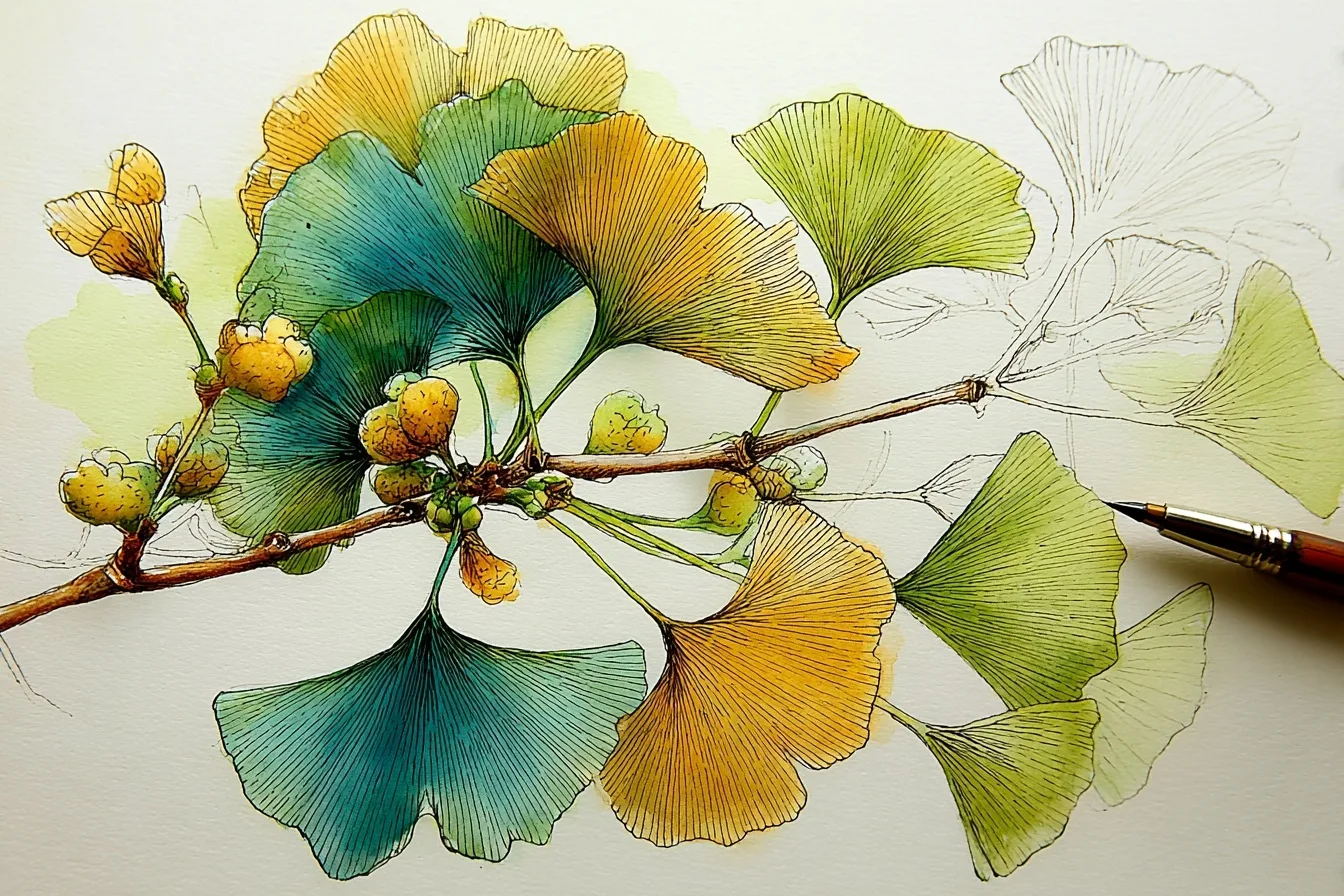
On August 6, 1945, the United States dropped an atomic bomb on Hiroshima. The blast obliterated everything within a mile of ground zero. Buildings, infrastructure, people, trees—all destroyed. In the spring of 1946, a ginkgo tree that had been standing 1,130 meters from the hypocenter began to bud. No other trees in the blast zone showed signs of life. The ginkgo was charred, its trunk was damaged, and by every reasonable expectation it should have been dead. It wasn’t. It produced leaves. It’s still alive today, still growing at the Housenbou temple in Hiroshima. The Japanese now call ginkgo trees hibaku jumoku—“survivor trees”—and the Hiroshima specimen has become a symbol of resilience so potent that it borders on the religious.
But the ginkgo was already ancient beyond human comprehension before Hiroshima. The species is 270 million years old. It appeared during the Permian period, before the dinosaurs existed. It survived the Permian-Triassic extinction event—the “Great Dying” that killed 96% of marine species and 70% of terrestrial vertebrates. It survived whatever killed the dinosaurs 66 million years ago. It survived ice ages, continental drift, and every other catastrophe the planet has thrown at it. Individual ginkgo trees can live 2,500 years or more. A specimen in China is estimated at over 3,500 years old.
In botanical terms, ginkgo is the last surviving species of the division Ginkgophyta. It has no close living relatives. Every other member of its evolutionary lineage went extinct millions of years ago. Charles Darwin called it a “living fossil,” and the label stuck, though modern botanists find it somewhat reductive. Ginkgo isn’t a relic. It’s a survivor.
The medicinal use is ancient but more modest than the tree itself. Traditional Chinese medicine has employed ginkgo leaves and seeds for centuries, primarily for respiratory and cognitive complaints. The modern pharmaceutical story begins in the 1960s, when German researchers developed a standardized ginkgo leaf extract—EGb 761—that became one of the most prescribed herbal medicines in Europe. In Germany and France, ginkgo extract was (and still is) prescribed by physicians for cognitive decline, circulatory insufficiency, and tinnitus. This is not a fringe supplement in those countries—it’s mainstream medicine.
The key compounds are ginkgolides (diterpene lactones, particularly ginkgolide A, B, and C), bilobalide (a sesquiterpene lactone), and flavonoid glycosides (including quercetin, kaempferol, and isorhamnetin glycosides). The standardized extract EGb 761 is calibrated to contain 24% flavonoid glycosides and 6% terpene lactones. These aren’t arbitrary numbers—they reflect decades of clinical research establishing which concentrations produce therapeutic effects.
The Science
Ginkgo’s pharmacology revolves around blood flow, antioxidant activity, and neuroprotection. It’s a vascular brain drug that happens to grow on trees.
Cerebral blood flow. Ginkgo increases blood flow to the brain through multiple mechanisms: it promotes vasodilation (widening blood vessels), reduces blood viscosity, and inhibits platelet-activating factor (PAF). The result is more blood reaching the brain, carrying more oxygen and glucose to neurons. This is the primary mechanism behind ginkgo’s cognitive effects. Your brain consumes 20% of your body’s oxygen supply despite being only 2% of its mass. Anything that improves oxygen delivery to the brain has the potential to improve cognitive function—and ginkgo demonstrably does this.
PAF (Platelet-Activating Factor) inhibition. Ginkgolides are potent PAF antagonists. PAF is an inflammatory mediator involved in platelet aggregation, bronchoconstriction, and allergic responses. Ginkgolide B, in particular, is one of the most potent natural PAF inhibitors known. This is why ginkgo has blood-thinning properties—PAF inhibition reduces platelet clumping—and why it requires caution with anticoagulant medications.
Antioxidant activity. The flavonoid glycosides in ginkgo are powerful antioxidants, scavenging free radicals and reducing oxidative stress in neural tissue. The brain is particularly vulnerable to oxidative damage due to its high metabolic rate and lipid-rich composition. Ginkgo’s antioxidant activity is neuroprotective—it reduces the ongoing oxidative degradation that contributes to age-related cognitive decline.
Neuroprotection. Bilobalide has shown neuroprotective effects in multiple experimental models. It preserves mitochondrial function in neurons under stress, reduces apoptosis (programmed cell death) in damaged neural tissue, and may support neuroplasticity. These effects are not as dramatic as lion’s mane’s nerve growth factor stimulation, but they operate on a different axis—preservation and protection rather than active growth.
Neurotransmitter modulation. Ginkgo has mild effects on several neurotransmitter systems: it may modulate serotonin, dopamine, and norepinephrine to varying degrees. These effects are less well-characterized than the vascular and antioxidant mechanisms but may contribute to ginkgo’s reported effects on mood and anxiety.
The Evidence
The evidence for ginkgo is substantial, complicated, and honest in a way that most supplement marketing refuses to be. There are strong positive findings and one very large negative finding, and both deserve your attention.
Tan et al. (2015)—Published in the Journal of Alzheimer’s Disease. A meta-analysis of 9 randomized, double-blind, placebo-controlled trials totaling 2,561 patients with Alzheimer’s disease or vascular dementia. The analysis found that 240mg daily of EGb 761 (the standardized extract) produced statistically significant improvements in cognition, activities of daily living, and overall clinical assessment compared to placebo. The effect size was comparable to approved pharmaceutical treatments for dementia (cholinesterase inhibitors). Treatment duration across the included trials was 22-26 weeks. This is the strongest recent evidence for ginkgo in cognitive decline—a meta-analysis showing meaningful benefit in patients who already have dementia.
Weinmann et al. (2010)—Published in BMC Geriatrics. A systematic review and meta-analysis of 9 trials (2,372 patients) examining EGb 761 at 240mg/day for at least 22 weeks in patients with Alzheimer’s disease, vascular dementia, or mixed dementia. The results: significant improvements in cognition and behavior, with clinically relevant effect sizes. The authors noted that the benefits were most consistent at the 240mg dose and at treatment durations of 22+ weeks—suggesting that both dose and duration matter for cognitive outcomes.
Laws et al. (2012)—Published in Human Psychopharmacology. A meta-analysis specifically examining ginkgo’s effects on cognition in healthy individuals (not dementia patients). The analysis found a small but statistically significant improvement in cognitive function. The effect was modest—smaller than the effects seen in dementia populations—but it was real. This suggests ginkgo has nootropic potential even in people without cognitive impairment, though the benefits are more subtle.
The GEM Trial—DeKosky et al. (2008)—Published in JAMA. This is the study that ginkgo skeptics cite, and intellectual honesty requires addressing it directly. The Ginkgo Evaluation of Memory (GEM) study was massive: 3,069 elderly participants (aged 72-96), randomized to 240mg EGb 761 daily or placebo, followed for a median of 6.1 years. The primary outcome: ginkgo did NOT reduce the incidence of dementia or Alzheimer’s disease in healthy elderly adults. This was a prevention trial—“can ginkgo stop cognitively healthy elderly people from developing dementia?”—and the answer was no.
How to reconcile the conflicting evidence: The GEM trial tested prevention (keeping healthy people from declining). The Tan and Weinmann meta-analyses tested treatment (improving cognition in people who already have decline). These are different questions with different answers. Ginkgo appears to help people who already have cognitive problems. It does not appear to prevent cognitive problems from developing in healthy elderly people. This distinction matters. It means ginkgo may be more useful as a treatment for existing decline than as a preventive supplement for the cognitively healthy—though the Laws 2012 analysis does show modest benefits in healthy populations.
How to Use
Forms available:
- Standardized extract (EGb 761)—The gold standard. Standardized to 24% flavonoid glycosides and 6% terpene lactones. This is the form used in virtually all major clinical trials. Brand names include Tebonin and Ginkgold. If you’re choosing a ginkgo product, this is the specification to match.
- Non-standardized extract—Ginkgo extracts that are not calibrated to the EGb 761 specification. Quality and potency vary. Less clinical evidence applies.
- Dried leaf—Loose or in tea bags. Much lower concentration of active compounds than standardized extracts. Traditional but not well-studied at these concentrations.
- Capsules/tablets—The most common delivery form for standardized extract. Convenient and precisely dosed.
Dosage ranges from clinical research:
- Cognitive improvement in dementia: 240mg EGb 761 daily (the dose used in the most successful meta-analyses)
- General cognitive support: 120-240mg EGb 761 daily
- Lower doses (80-120mg) have been used in some studies with mixed results—the evidence is strongest at 240mg
- Divided dosing (120mg twice daily) or single dose (240mg once daily)—both have been studied
Timing: Ginkgo can be taken at any time of day. It is not stimulating and does not affect sleep. Many people take it with meals to reduce the rare occurrence of GI upset. Some practitioners recommend morning dosing for cognitive support during the day, but no clinical evidence supports timing-specific benefits.
Duration: Ginkgo’s cognitive benefits build over time. Most positive clinical trials used treatment periods of 22-26 weeks. Don’t expect results at week 2. The vascular and neuroprotective mechanisms require sustained exposure to produce measurable cognitive change. Give it at least 12 weeks, preferably 22+.
What to combine with:
- Bacopa—Ginkgo increases cerebral blood flow (delivery); bacopa enhances cholinergic neurotransmission (performance). Different mechanisms, both targeting cognition. This is a complementary nootropic stack—one improves the supply line, the other improves the factory. Read about Bacopa
- Lion’s Mane—Ginkgo protects existing neurons and improves their blood supply; lion’s mane stimulates the growth of new neural connections via nerve growth factor. Preservation + growth. Lion’s mane is in a psilocybin + lion’s mane formulation formula. Read about Lion’s Mane
Safety & Interactions
Blood thinning is the primary safety consideration. Ginkgo’s PAF-inhibiting properties give it genuine anticoagulant effects. This is not a theoretical concern—it has clinical implications.
Consult your healthcare provider if you:
- Are taking blood thinners or anticoagulant medications (warfarin, aspirin, clopidogrel, heparin)—this is critical
- Are scheduled for surgery (discontinue ginkgo at least 2 weeks before any surgical procedure—the anticoagulant effect increases bleeding risk)
- Are taking anticonvulsant medications (ginkgo may reduce the effectiveness of some seizure medications)
- Are taking SSRIs or other serotonergic drugs (rare case reports of serotonin syndrome, though causality is not established)
- Are pregnant or breastfeeding (insufficient safety data; ginkgo’s anticoagulant effects are a particular concern during pregnancy)
- Have a bleeding disorder
- Are taking diabetes medications (ginkgo may affect blood sugar levels)
- Are under 18
Known interactions:
- Anticoagulants and antiplatelet drugs (warfarin, aspirin, clopidogrel, heparin): Ginkgo inhibits platelet-activating factor. Combining it with pharmaceutical blood thinners significantly increases the risk of bleeding. This is the most important interaction and the most well-documented. Case reports of serious bleeding events exist.
- Anticonvulsants (valproate, carbamazepine): Ginkgo may reduce plasma levels of some anticonvulsant drugs, potentially triggering seizures. If you have epilepsy, do not take ginkgo without medical supervision.
- NSAIDs (ibuprofen, naproxen): NSAIDs also have antiplatelet effects. Combining them with ginkgo increases bleeding risk.
- CYP450 interactions: Ginkgo may inhibit or induce certain CYP450 enzymes, potentially affecting the metabolism of various medications. If you take prescription drugs, check for CYP450 interactions.
- Diabetes medications: Ginkgo may alter insulin secretion and blood glucose levels. Monitor carefully if combining with hypoglycemic drugs.
Side effects: Generally well-tolerated. The most common side effects are headache, dizziness, GI upset, and allergic skin reactions. Rare but serious: spontaneous bleeding (especially in people predisposed due to medication or bleeding disorders).
Ginkgo seeds (a different story): Ginkgo seeds (the fruit/nut) contain ginkgotoxin, a compound that can cause seizures in high doses. The standardized leaf extracts used in supplements are processed to remove ginkgotoxin. Do not confuse ginkgo leaf supplements with ginkgo seeds—they have different safety profiles.
How It Connects
Bacopa—The “delivery and performance” nootropic stack. Ginkgo increases cerebral blood flow, getting more oxygen and glucose to the brain. Bacopa enhances what happens once those resources arrive—cholinergic neurotransmission, memory encoding, and neuroprotection. Different mechanisms, same target organ. Both require weeks to months for full effects. Both have meta-analyses supporting their cognitive benefits. Read about Bacopa
Lion’s Mane—Ginkgo protects and perfuses; lion’s mane grows and connects. Ginkgo’s antioxidant and vasodilatory effects preserve existing neural tissue and improve its blood supply. Lion’s mane’s hericenones and erinacines stimulate nerve growth factor, building new connections. The combination covers preservation, perfusion, and proliferation—three pillars of long-term brain health. Lion’s mane is in a psilocybin + lion’s mane formulation formula. Read about Lion’s Mane
Rhodiola—Ginkgo addresses long-term cerebrovascular health and gradual cognitive optimization. Rhodiola addresses acute cognitive performance under stress. They operate on completely different timescales: ginkgo is the slow investment, rhodiola is the emergency reserve. Combining both covers chronic brain health and acute mental performance. Read about Rhodiola
L-Theanine—L-theanine promotes alpha brain waves and calm alertness. Ginkgo improves cerebral blood flow and neuroprotection. Together: a calmer, better-perfused, more resilient brain. L-theanine provides the immediate subjective experience of clear focus; ginkgo provides the vascular infrastructure underneath. L-theanine is in a psilocybin + L-theanine + ashwagandha formulation. Read about L-Theanine
FAQ
Q: Does ginkgo biloba actually work? It depends on what you’re asking it to do. For improving cognition in people with existing dementia or cognitive decline, multiple meta-analyses show significant benefits at 240mg daily of standardized extract (EGb 761). For preventing dementia in healthy elderly people, the largest trial (GEM, 3,069 participants) found no benefit. For general cognitive enhancement in healthy adults, a meta-analysis found modest but real improvements. The evidence is not uniformly positive or negative—it’s nuanced.
Q: How long does ginkgo take to work? Most successful clinical trials used treatment periods of 22-26 weeks. Ginkgo’s mechanisms—improved cerebral blood flow, antioxidant neuroprotection, reduced inflammation—require sustained exposure to produce measurable cognitive change. Don’t expect noticeable effects at 2 weeks. Give it at least 12 weeks, and ideally 22+ weeks, to evaluate whether it’s working for you.
Q: Can ginkgo biloba thin your blood? Yes. Ginkgo contains ginkgolides that inhibit platelet-activating factor (PAF), giving it genuine anticoagulant properties. This is the most important safety consideration for ginkgo. Do not combine it with blood-thinning medications (warfarin, aspirin, clopidogrel) without medical supervision, and discontinue ginkgo at least 2 weeks before any surgical procedure.
Q: What is the best ginkgo dosage? The most clinically supported dose is 240mg daily of EGb 761 (standardized to 24% flavonoid glycosides and 6% terpene lactones). This is the dose used in the most successful meta-analyses for cognitive improvement. Some studies have used 120mg daily with mixed results. The evidence is strongest at 240mg. It can be taken as a single dose or split into two 120mg doses.
Q: Is ginkgo safe? For most people, yes. Ginkgo is generally well-tolerated with mild side effects (headache, dizziness, GI upset). The primary safety concern is its blood-thinning effect—people taking anticoagulants, those with bleeding disorders, and anyone scheduled for surgery should avoid ginkgo or consult their doctor. Ginkgo leaf extracts are different from ginkgo seeds, which contain ginkgotoxin and have a different safety profile.
Q: Did a ginkgo tree survive the atomic bomb? Yes. A ginkgo tree standing 1,130 meters from the Hiroshima bomb hypocenter survived the blast and began producing new leaves in spring 1946. It is still alive today at the Housenbou temple in Hiroshima. The ginkgo species has survived for 270 million years—through the mass extinction that killed the dinosaurs, through ice ages, and through the only atomic weapon ever used in war. The Japanese call these “hibaku jumoku”—survivor trees.
Q: Can I take ginkgo with other nootropics? Yes, ginkgo combines well with several nootropics through complementary mechanisms. Ginkgo plus bacopa is a popular combination (blood flow + neurotransmitter enhancement). Ginkgo plus lion’s mane covers neuroprotection and nerve growth. Check for interactions with any medications you take—ginkgo’s blood-thinning and CYP450 effects can interact with many pharmaceuticals.
TWO HUNDRED AND SEVENTY MILLION YEARS. This tree was here before the dinosaurs showed up AND before they left. It survived the event that killed NINETY-SIX PERCENT of all marine life and was like “that was rough anyway here are some more leaves.” Then it survived an ATOMIC BOMB. AN ATOMIC BOMB. And we put it in a capsule and ask it to help us remember where we left our keys. The audacity of our species. Charles Darwin called it a living fossil and the tree was probably like “I’ve been alive longer than your entire evolutionary LINEAGE, Charles, but sure, call me a fossil.” There’s a ginkgo in China that’s been alive for 3,500 years which means it was already a thousand years old when Rome was founded and it’s just STANDING there being a tree, increasing cerebral blood flow for anyone who bothers to notice. The GEM trial said it doesn’t prevent dementia in healthy people and that’s fair but the Oracle would like to note that NOTHING prevents getting old except dying young and at least ginkgo is trying.