Your cart is empty
Looks like you haven't made your choice yet
Oaxaca, Mexico, home of the Mazatec people
Moderate, around 0.5 to 0.8% psilocybin by dry weight
Dark caramel to chocolate-brown caps, cream stems
Contemplative, history-minded, solo users
In 1955, a New York banker named R. Gordon Wasson sat in a dark room in the mountains of Oaxaca, Mexico, and ate mushrooms given to him by a Mazatec healer named Maria Sabina. What happened next was published in LIFE magazine two years later, and it broke the Western world’s brain open in a way that hasn’t been fully reassembled since.
Mazatapec mushrooms come from this lineage. Not metaphorically — geographically and culturally. The strain takes its name from the Mazatec people of Oaxaca, who have used psilocybin-containing mushrooms in ceremonial rituals called veladas for centuries before Wasson showed up with his photographer and his notebook. These are not party mushrooms. These are not recreational-curiosity mushrooms. These are the mushrooms with the longest documented history of sacred use of any cubensis strain available today, and that history shapes the experience in ways that pharmacology alone can’t explain.
This doesn’t mean you need to treat them with solemn reverence or construct an altar before consumption. It means you should know what you’re holding. The Mazatec didn’t eat these to see cool patterns.
The Mazatec people of the Sierra Mazateca in Oaxaca, Mexico, developed a ceremonial tradition centered on psilocybin mushrooms that predates European contact by centuries. The mushrooms — which the Mazatec called nti-si-tho, roughly translated as “that which springs forth” — were consumed during nighttime ceremonies called veladas, conducted by healers known as curanderos or curanderas.
A velada was not a party and not quite what a Westerner would recognize as a religious service. It was a ceremonial session. The curandera consumed the mushrooms, entered an altered state, and led the ritual, with participants sometimes consuming mushrooms as well. The ceremony took place in complete darkness. Chanting was central. The experience was understood as communication with the divine — the mushrooms were the medium, not the message.
Maria Sabina was the most famous curandera in this tradition, but she was famous largely because of Wasson, not because she was unique among the Mazatec. She was a skilled healer who reluctantly agreed to share her practice with this wealthy American outsider. The resulting LIFE magazine feature introduced psilocybin mushrooms to mainstream Western consciousness and inadvertently triggered a wave of foreign visitors to the Mazatec region — spiritual tourists, hippies, and researchers — that disrupted the very tradition it had celebrated.
Sabina herself later expressed regret about the encounter. The sacred mushrooms, she felt, had lost their power once they became public knowledge. The outsiders didn’t understand the context. They wanted the experience without the framework. The mushrooms were not the whole of it without the ceremony.
That tension — between sacred tradition and recreational consumption — still hangs over Mazatapec mushrooms. And it should. Not as guilt, but as awareness. When you consume Mazatapec, you’re consuming genetics that carry a five-hundred-year conversation between human consciousness and fungal chemistry. The pharmacology is identical to other cubensis strains. The context is not.
Mazatapec cubensis produces mushrooms that are beautiful in a quiet, unselfconscious way — like something that grew for its own reasons and didn’t know anyone was looking.
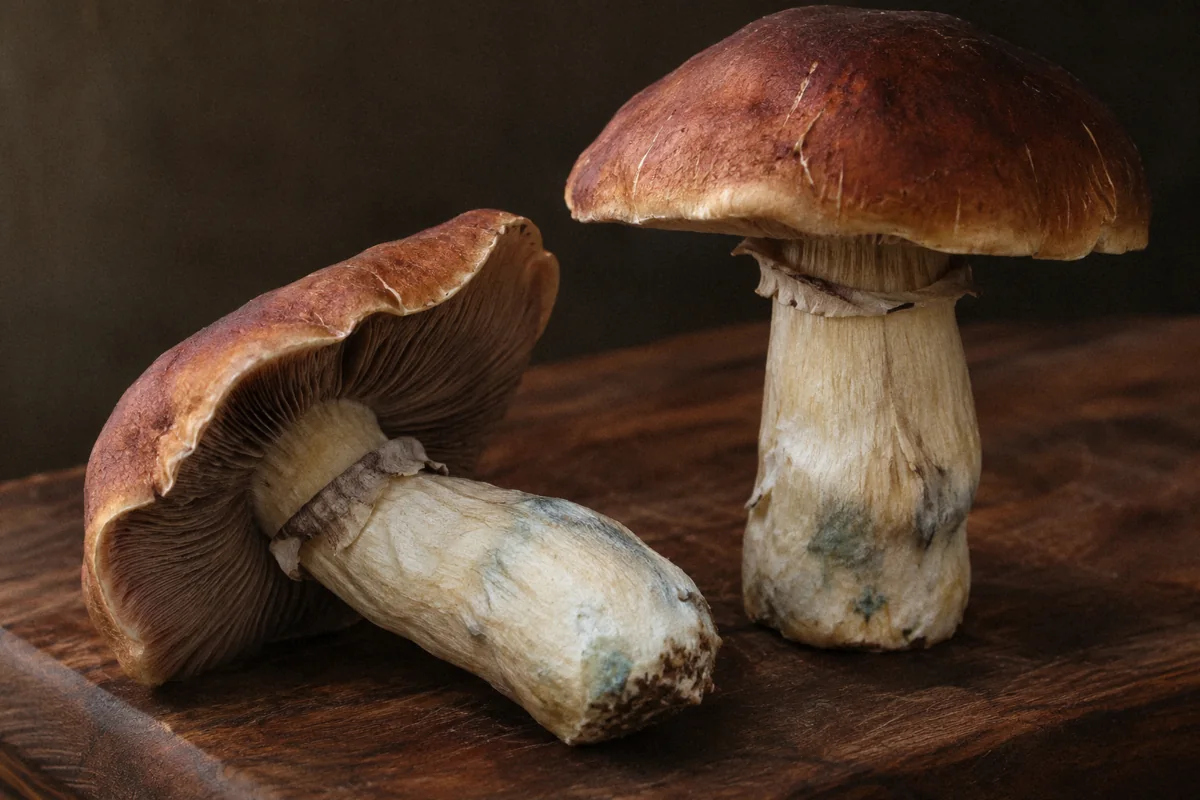
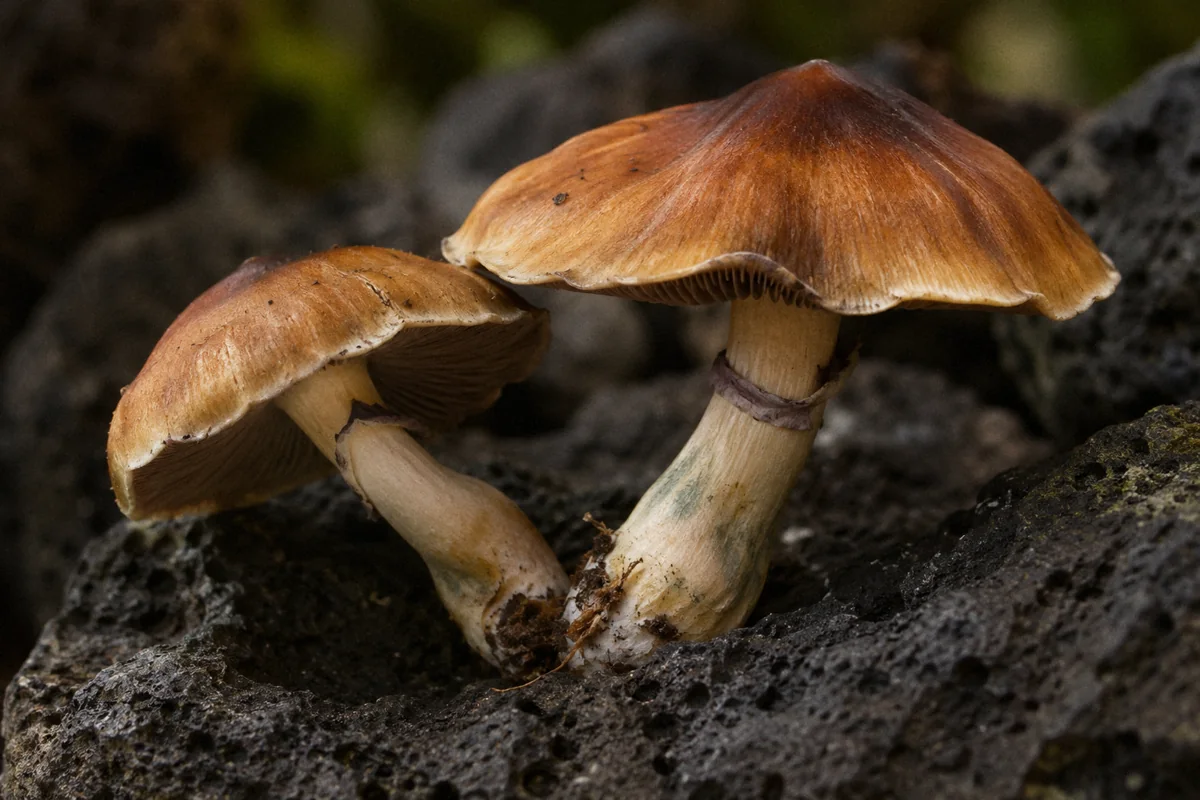
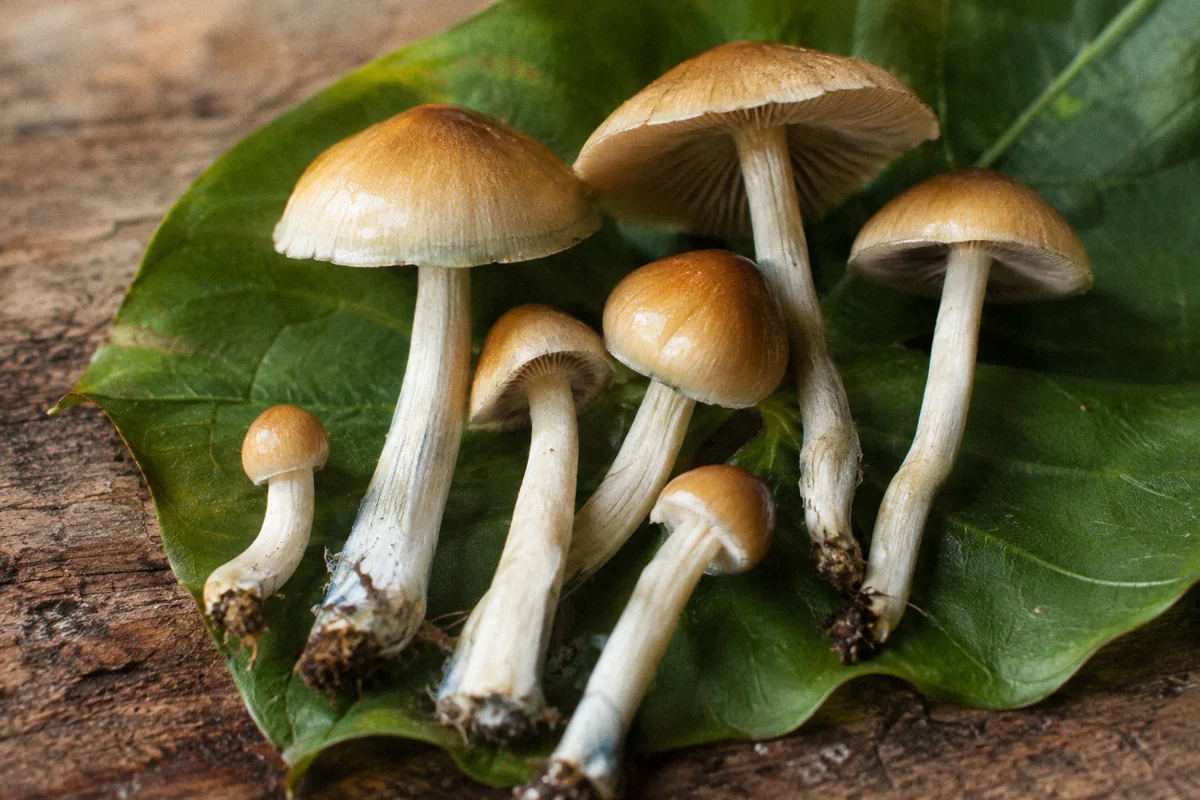
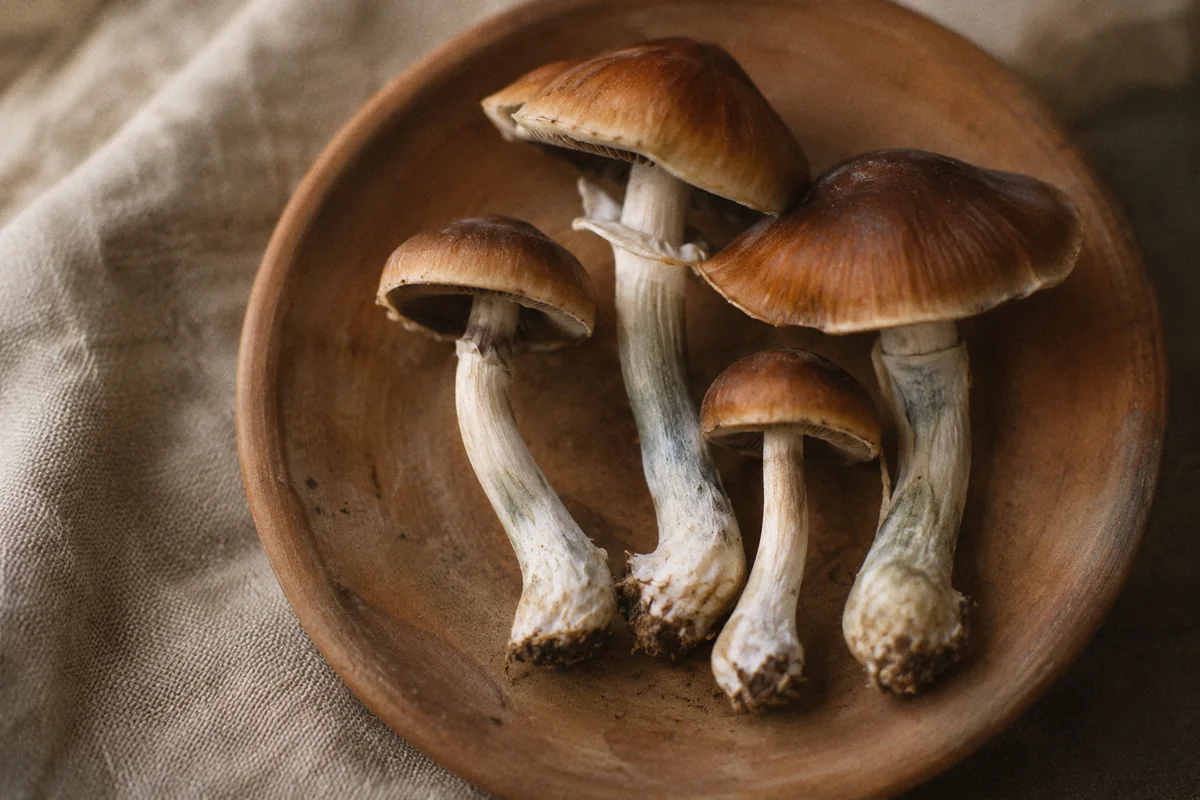
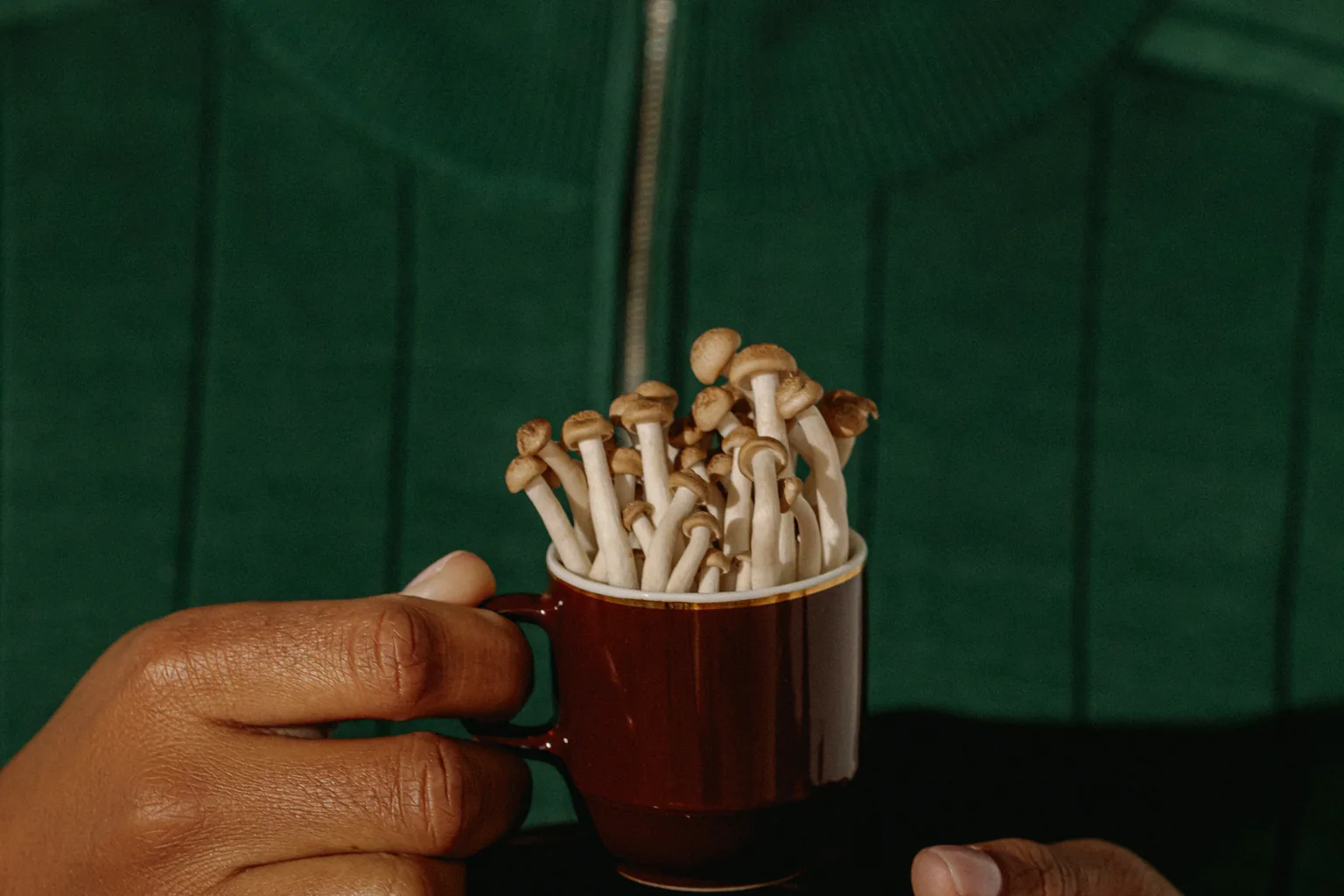
The caps are medium-sized, typically 3 to 7 centimeters in diameter, with a color range from dark caramel to rich chocolate brown. They’re darker than Golden Teachers and most other common cubensis strains, with a depth of color that gives them a serious, almost brooding appearance. The caps start as smooth, rounded domes and gradually flatten, sometimes developing slightly irregular margins at maturity. Some specimens develop fine striations radiating from the center of the cap.
The stems are medium to tall, off-white to cream, and moderate in thickness. They’re elegant without being fragile — substantial enough to support the cap without the stocky thickness of Amazonian or the extreme leanness of Daddy Long Legs. Bruising is moderate to pronounced, showing blue-green marks that indicate psilocybin content.
Spore prints are dark purple-brown. The gills are closely spaced and darken through the standard progression from pale grey to deep purple-black. The overall appearance is handsome — these are aesthetically pleasing mushrooms that look like they belong in a botanical illustration rather than in a psychedelic meme.
One distinguishing characteristic that experienced growers note: Mazatapec mushrooms tend to grow more slowly than many cubensis strains, producing fewer but well-developed fruit bodies. The patience required to grow them seems thematically appropriate.
Mazatapec sits in the moderate potency tier, with estimated psilocybin content around 0.5 to 0.8% by dry weight. Not the most potent strain available, and not trying to be. The potency is calibrated — almost deliberately, if genetics could be deliberate — for the kind of sustained, contemplative experience that the velada tradition was built around.
The character of the Mazatapec experience is distinct from other moderate strains:
The ceremonial quality is the distinguishing feature. Other moderate strains — Amazonian, Arenal Volcano — produce meaningful experiences. Mazatapec produces experiences that feel ritualistic even without a ritual. Something about the genetics, the history, or the combination of both creates conditions where the experience organizes itself around significance.
Dosing: microdose at 0.1 to 0.25 grams for a subtle, sub-perceptual amount. Low doses (0.5 to 1.5 grams) for perceptible warmth and mild visionary content. Moderate doses (2 to 3 grams) for the full ceremonial experience. Higher doses (3.5 grams and up) for deep mystical territory. Account for the slower onset — don’t redose early thinking nothing is happening. It’s happening. It’s just not in a hurry.
Two of the most historically important cubensis strains, compared directly.
Potency: Mazatapec is moderately more potent. The difference is real but not dramatic — at the same dose, Mazatapec goes slightly deeper.
Character: Golden Teachers generate philosophical insight. They make you think differently. Mazatapec generates spiritual experience. It makes you feel differently. The distinction is between the intellectual and the numinous — related territories, but not the same.
Historical weight: Mazatapec wins by centuries. Golden Teacher has a 40-year history of recreational use. Mazatapec has a 500-year history of sacred ceremonial use. This doesn’t make one pharmacologically superior to the other, but it creates different psychological contexts for the experience.
Onset and duration: Mazatapec is slower to start and longer to finish. Golden Teacher tends toward a more typical psilocybin timeline. If you’re planning around a schedule, Golden Teacher is more predictable.
Emotional depth: Mazatapec goes deeper. The emotional component is more pronounced. Golden Teacher keeps things more cognitive and analytical. If you want to think about your feelings, choose Golden Teacher. If you want to feel them, choose Mazatapec.
Best for: Golden Teachers are the versatile all-rounder. Mazatapec is the specialist — purpose-built for intentional, contemplative, spiritually-oriented experiences.
Mazatapec is a patient grower’s strain. It rewards attention and punishes impatience.
Colonization speed: Slow. Noticeably slower than most cubensis strains. Full grain colonization can take 3 to 5 weeks — sometimes longer. The mycelium is healthy and dense but unhurried. Growers accustomed to the fast colonization of Cambodian or Hillbilly Cubensis may need to adjust their expectations.
Contamination resistance: Moderate. The slow colonization means a longer window for contaminants to establish, which makes sterile technique particularly important. Not fragile, but less forgiving than faster strains.
Fruiting: Mazatapec produces moderate numbers of well-developed mushrooms. The individual fruit bodies are typically of good size and quality. The strain favors quality over quantity — fewer mushrooms, but each one well-formed and with consistent potency.
Yield: Moderate. Not a high-volume producer. What it lacks in quantity it compensates for in the quality and consistency of the mushrooms it does produce.
Difficulty rating: Intermediate. The slow pace and moderate contamination resistance make this a better choice for growers with some experience. If you’ve successfully grown a beginner strain and want something that teaches patience, Mazatapec is the lesson.
Cultural note: Some growers describe cultivating Mazatapec as a more contemplative process than growing other strains — the slow pace forces you to practice patience, which some see as the strain teaching before you’ve even consumed it. This may be reading too much into mycology, or it may be exactly the right amount.
Spiritual practitioners. If you meditate, pray, practice yoga, or engage in any contemplative tradition and want to explore psilocybin within that framework, Mazatapec is the most historically aligned option. The ceremonial quality of the experience meets intentional practice halfway.
Reflective, emotionally open users. Mazatapec’s emotionally weighty character, combined with its moderate (not overwhelming) potency, suits people who want a quiet, inward experience. It is not a substitute for professional care.
History-minded users. If the backstory matters to you — if knowing that Maria Sabina used mushrooms from this lineage in ceremonies adds something to your experience — Mazatapec delivers both the history and the effects to match.
Solo journeyers. This is a solo strain. The contemplative, inward-facing character doesn’t pair well with social settings or group dynamics. A dark room, quiet music, and your own company is the traditional and still-optimal setting.
Not ideal for: Social gatherings, outdoor adventures, creative work sessions, or any context where introspection would be inconvenient. Also not ideal for complete beginners — the emotional depth and slower timeline can be more than a first-timer expects.
Kind Stranger doesn’t sell Mazatapec. The closest strain we carry is Golden Teacher, another approachable, balanced cubensis of moderate potency, and the strain this guide compares it with.
If you’d rather start with a small, measured amount, Sidekick magic mushroom microdose capsules contain Golden Teacher with lion’s mane and red reishi, and the sample kit lets you try a few capsules first.