

Your cart is empty
Looks like you haven't made your choice yet
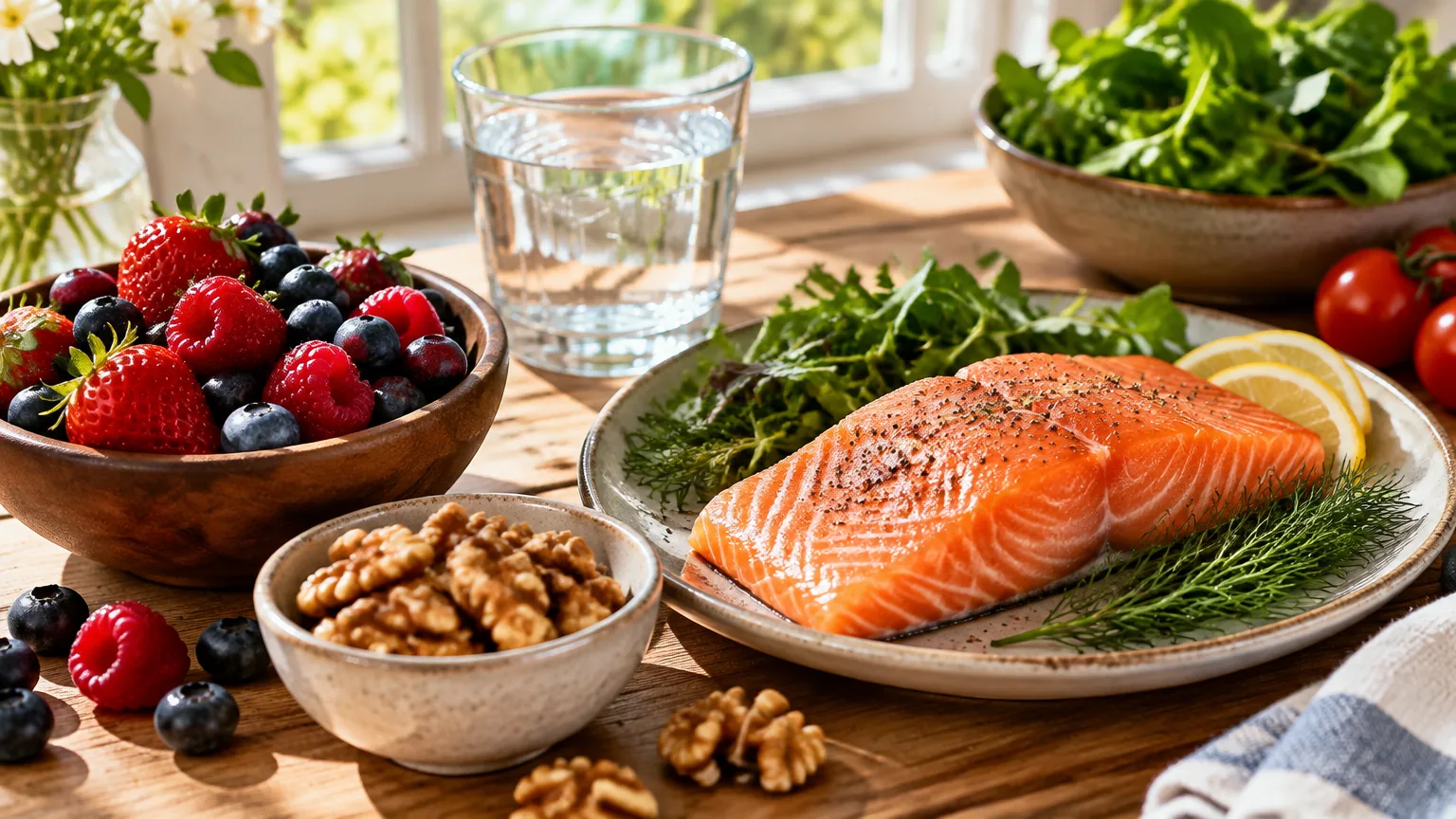
Most people who microdose don’t treat it like a magic switch. It’s one part of a day that’s already pointed in the right direction.
The mushrooms get the attention, but the quiet work happens at the dinner table, at the tap, on the walk, and in the bed. If you’ve been curious about stacking a microdose alongside better habits, it helps to look at the whole picture. The habits and the dose tend to reinforce each other rather than compete.
This article walks through the foundations first: food, water, movement, and sleep. Then we’ll look at where a microdose fits beside those habits, and how people in Canada are thinking about the whole arrangement. If you want a deeper primer on attention in general, our guide on how to improve concentration naturally covers the broader landscape.
Your brain is a small percentage of your bodyweight, and it burns a wildly disproportionate share of your energy. What you feed it isn’t a side note. It’s the raw material for every thought, every mood, and every focused hour you get.
Harvard Health has put together a short list of foods consistently linked to better brainpower. Each group is worth walking through, because they’re ordinary, affordable, and sitting on the shelf at any Canadian grocery store.
Salmon, mackerel, sardines, and trout are rich in omega-3 fatty acids, particularly the forms your brain actually uses. Omega-3s are structural components of brain cell membranes, and they play a role in inflammation regulation and cell signalling. That’s why Harvard’s writeup puts fatty fish near the top of the brain-food list.
If you don’t eat fish, algae-based omega-3 supplements exist, though whole food sources are generally the first recommendation. A couple of servings a week is the pattern most health bodies point toward. Not a heroic overhaul — a repeated, boring, effective habit.
Berries — blueberries especially, but also strawberries, blackberries, and raspberries — carry flavonoids, the plant compounds that give them their colour. These compounds have been studied for their relationship to memory and cognitive performance over the long term.
And frozen berries count. They’re picked at peak ripeness, they’re cheaper in the middle of a Canadian winter, and they blend into everything from oatmeal to smoothies. The habit that matters isn’t exotic fruit — it’s a regular, modest serving of deeply coloured berries, week after week.
Nuts bring healthy fats, protein, vitamin E, and a satiating quality that makes them a genuinely useful snack. Walnuts get particular attention because they’re one of the better plant sources of omega-3s. A small handful is a serving, and this is one food group where more isn’t better, since the calories add up fast.
The practical move is keeping a jar of mixed nuts somewhere you’ll actually see it. The afternoon vending machine visit quietly loses its appeal.
Seeds are the underrated member of this list. Flax, chia, hemp, and pumpkin seeds deliver fibre, magnesium, zinc, healthy fats, and — in the case of flax and chia — plant omega-3s. They’re cheap, shelf-stable, and they disappear into yogurt, oatmeal, or a smoothie without changing the flavour much.
For anyone building a focus-oriented diet, seeds are the easiest upgrade with the least friction. You don’t need to overhaul anything. You just sprinkle.
Leafy greens like spinach, kale, and Swiss chard show up again and again in research on cognitive ageing, likely because of their folate, vitamin K, lutein, and broader nutrient density. Beyond greens, the general rule is variety and colour: broccoli, peppers, beets, carrots, whatever’s in season and whatever you’ll actually eat. Vegetables also feed the gut microbiome, which is increasingly discussed in relation to mood and cognition.
The plate doesn’t need to be perfect. It needs to be mostly plants, mostly whole foods, mostly consistent.
It’s strange how much of cognition comes down to three things nobody finds exciting. Dehydration, a sedentary day, and a bad night’s sleep will undo a perfect diet faster than anything else possibly could.
Even mild dehydration measurably affects concentration, mood, and working memory — often before you feel thirsty. The brain is mostly water, and its fluid balance is unforgiving.
The practical habit is simple: water within reach all day, a glass first thing in the morning, and one with every meal. Canadians in dry winter heating or hot summer spells lose more fluid than they notice.
You don’t need to count ounces obsessively. Pale urine and steady energy are decent signals you’re on track. Coffee and tea count toward intake, though they’re not a replacement for plain water as the default.
Exercise is one of the most reliable cognitive enhancers known. A brisk walk increases blood flow to the brain, supports the release of growth factors involved in neural health, and reliably sharpens attention for a period afterward.
You don’t need a marathon habit. A daily walk — ideally outside, ideally at a pace where conversation is possible but singing isn’t — plus a couple of sessions of something moderately challenging each week covers most of the benefit.
Many microdosers deliberately schedule their dose days around movement, pairing a walk with the clearest hours of the dose. The two habits seem to complement each other well. A lot of people find the walk is where the day’s best thinking happens.
Sleep is when the brain consolidates memory, clears metabolic waste, and resets its emotional baseline. One short night shows up the next day as scattered attention, flattened mood, and poor impulse control. Chronic short sleep shows up as all of that, plus long-term risk.
The foundations are consistent: a regular bedtime and wake time, a dark and cool room, no screens in the final stretch before bed, and caffeine early in the day rather than late.
If you’re microdosing, this matters double. People commonly avoid dosing in the afternoon so it never touches their sleep window, and a well-rested baseline is the backdrop against which a microdose is most useful. Our dosing guide goes into the practical details of scheduling, including how experienced microdosers space their days.

Here’s the honest framing: food, water, movement, and sleep are the foundation. A microdose is what sits on top of a foundation. The people who report the best experiences are almost never the ones chasing an effect in isolation — they’re the ones who’ve got the boring pieces in place and use a microdose as one input among several.
The research picture is genuinely encouraging. A review of microdosing studies reported benefits for both mood and cognition among people who microdose, which lines up with what many long-term microdosers describe anecdotally: a slightly brighter baseline mood, a little more ease with focused work, and a sense of engagement with the day that can otherwise be hard to reach. You can read the review on PubMed.
Later work has offered a more neutral counterweight — some studies have found effects closer to what a placebo would produce, and researchers continue to call for tighter trials. That’s a reason to keep paying attention to the evidence, not a reason to write off what many people consistently report in their own lives.
In practice, a microdose seems to fit best as a complement to the habits above rather than a substitute for them. Some people find a microdosing day is a good day for deep work, since the slightly lifted mood and steadier attention pair well with a clear calendar. Others prefer pairing a dose with their morning walk or a creative session.
What almost nobody reports success with is using a dose to compensate for three hours of sleep and a day of vending machine food. The foundation always shows through.
If you’re building a routine around focus, our Sidekick blend was made with exactly this in mind: something that slots into a deliberate day rather than replacing one. Pair it with the salmon, the walk, and the early bedtime, and you’re approaching focus the way most experienced people do — from several directions at once.
A note on the legal landscape in Canada: shops selling psilocybin products may or may not be licensed, and the status of any given retailer isn’t always obvious from the storefront. Health Canada is clear on the law: the unauthorized production, sale, and possession of psilocybin are illegal. We think it’s important you know that, and we’d encourage anyone considering microdosing to understand the legal reality where they live and to make informed decisions accordingly.
Do I need to change my diet before I start microdosing?
You don’t need to, but you’ll almost certainly get more out of the experience if your baseline is decent. Mood and cognition respond to nutrition on their own, and a microdose seems to work best when there’s a healthy baseline to work from. The food groups above — fatty fish, berries, nuts, seeds, and plenty of vegetables — are the ones most consistently linked to brain health, and none of them are hard to add.
How much water should I drink on a microdosing day?
The same amount you should drink any other day. There’s nothing about a microdose that changes your hydration needs, but staying well hydrated supports the steadiness of attention that people are usually after in the first place. Keep water nearby and sip through the day rather than drinking large amounts at once.
Should I exercise while microdosing?
For most people, yes — gentle to moderate movement is one of the most common pairings. A walk, yoga, or light lifting tends to feel good and complements the headspace. Anything extremely intense is a matter of personal preference and comfort. Movement on its own is a well-supported cognitive aid, so the combination is a natural one.
Can I microdose in the evening?
Most experienced microdosers take their dose in the morning so it never interferes with sleep. Since sleep is one of the strongest levers on mood and cognition, protecting it is usually the priority. Our dosing guide covers timing and scheduling in more detail.
Are the brain benefits of food and microdosing the same thing?
No, and it’s worth keeping them distinct. Nutrition supports the brain’s underlying health — structure, energy, inflammation — over long timescales. A microdose works on a different axis, on the timescale of hours and days. They’re complementary, not interchangeable, and the people with the best experiences tend to treat them that way.
Is microdosing legal in Canada?
No, not outside of specific authorized contexts. As Health Canada states, the unauthorized production, sale, and possession of psilocybin are illegal. Some shops operate in a grey area, and licensing isn’t always clear from the outside. Anyone considering microdosing should understand the legal situation and weigh it seriously.
What’s the single best habit to start with?
If we had to pick one: sleep. It’s the lever with the broadest effect on mood, focus, and everything downstream, including how useful the other habits turn out to be. After that, water and a daily walk. The food upgrades can follow at whatever pace your grocery budget allows — frozen berries and a bag of seeds are an inexpensive place to begin.
Where can I read more about improving focus?
Our guide on improving concentration naturally covers the broader toolkit, and our dosing guide covers the microdosing side of things in detail.
Comments
There are no comments yet.