

Your cart is empty
Looks like you haven't made your choice yet
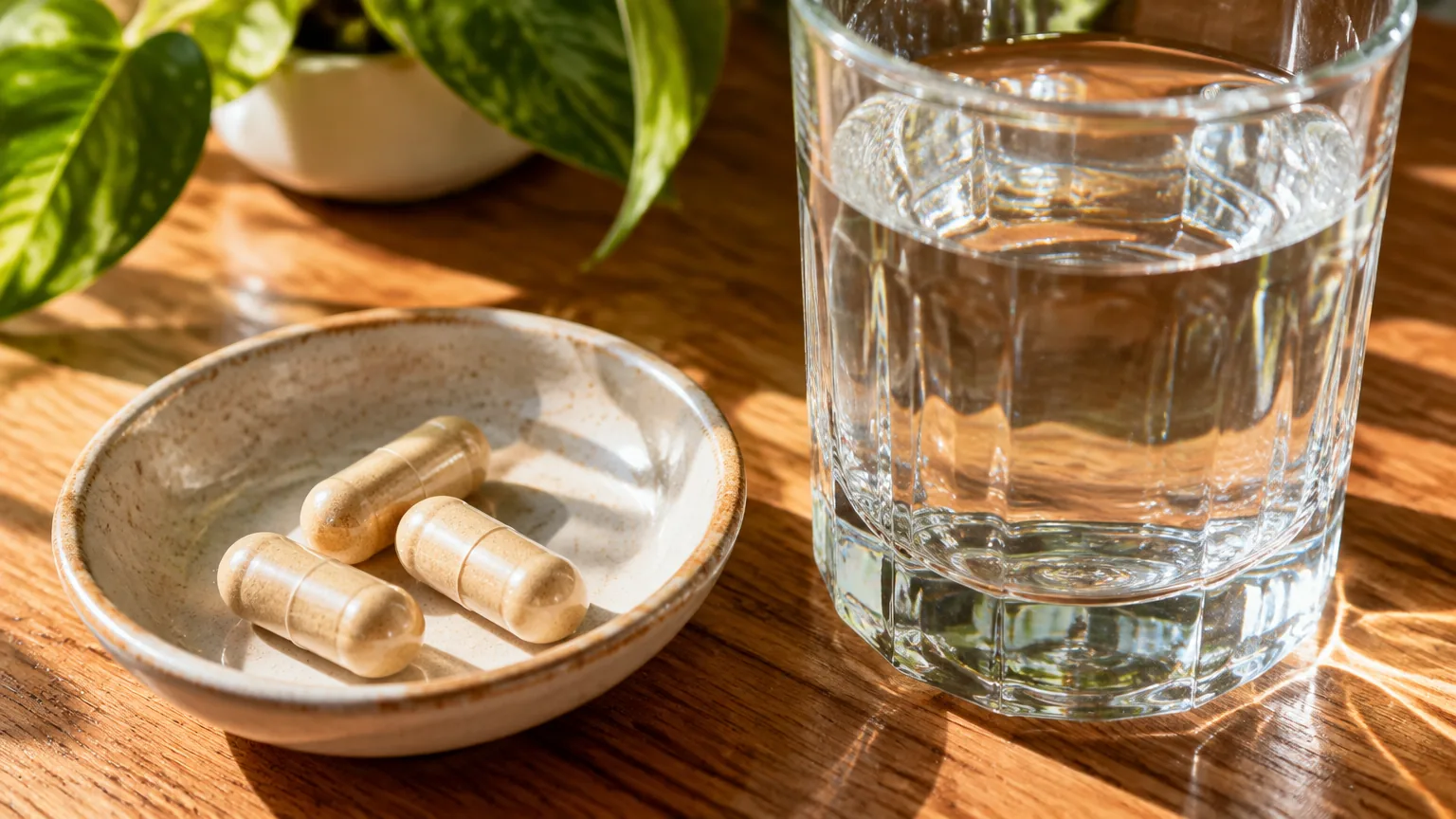
Microdosing has quietly worked its way into everyday conversations across Canada. Coffee shops, group chats, wellness newsletters — it comes up more than you’d think.
And among the people who’ve actually tried it, one format keeps coming up again and again: the capsule.
It’s small, it’s discreet, and it fits into a morning routine as easily as a vitamin. In this article, we’ll get into what the research reports about microdosing and mood, what a microdose capsule is actually for, how it stacks up against a gummy, who tends to prefer capsules, and how to build a simple routine around them. We’ll also touch on the legal picture in Canada, because it matters.
Start with the reason people are curious in the first place. A study published on PubMed looked at self-reported microdosing practices and found that people who microdosed reported improvements in mood and cognition.
Participants described things like reduced symptoms of depression, anxiety, and stress, along with greater focus and creativity.
Worth being clear about what that does and doesn’t mean, though. These are self-reported outcomes — people describing their own experiences. That’s genuinely useful, because it tells us what people actually notice, but it isn’t the same as a clinical trial with a control group. The researchers themselves flag the limitations, and future studies may paint a fuller picture.
Still, the pattern is consistent enough that it’s drawn attention from scientists, journalists, and regular people who just want a little more steadiness in their week. Reported benefits often include a brighter mood, a calmer internal monologue, and an easier time settling into focused work.
If you’re weighing whether microdosing deserves a place in your life, that body of self-report research is a reasonable starting point. And if you do decide to explore it, the format you choose — capsule, gummy, or something else — plays a bigger role than most people expect. Our dosing guide covers amounts, schedules, and expectations in detail, so we won’t get into specific quantities here.
At its most basic, a capsule is a delivery method. A pre-measured amount of psilocybin-containing material gets sealed inside a small shell, usually gelatin or a vegetarian alternative. You swallow it with water.
That’s the whole experience.
And that simplicity is the point. A capsule removes nearly every variable from taking a microdose. Nothing to measure, nothing to taste, nothing to prepare. You’re not estimating by eye or doing arithmetic at 7 a.m. before your first coffee. The amount inside is the amount that was put there, and that consistency is what makes capsules so well suited to a routine.
Think about what a microdosing practice actually asks of you: a small amount, on a schedule, over weeks or months, while paying attention to how you feel along the way. For that kind of practice, consistency isn’t a nice-to-have — it’s the foundation. If one day’s amount is noticeably different from another’s, it becomes much harder to tell whether a shift in your mood came from the practice itself, from an inconsistency in your routine, or from something else entirely. Capsules lock that variable down.
Then there’s taste. Psilocybin-containing material has an earthy, distinctly fungal flavour that most people don’t describe fondly. A capsule passes over the tongue entirely. For anyone sensitive to tastes or textures, that alone can be the difference between a practice that lasts and one that quietly falls apart by week three.
Capsules are also unassuming. They look like any other supplement. They don’t announce themselves in a drawer, a travel kit, or a weekly pill organizer. If you keep vitamins on the counter, a capsule fits right in without a second glance.
Small thing. But small things add up when a practice has to survive contact with a busy life.
They store well, too. Kept cool, dry, and away from direct light, they hold their contents steadily over time. You can portion out a week’s supply in advance and not think about it again until Sunday evening — ideal for people who like to front-load decisions and then get on with their week.
At our shop, capsules are one of the formats we take seriously precisely because of this consistency. Our Sidekick capsules are made for people who want a dependable, pre-measured option they can build a routine around without any fuss.

Capsules and gummies carry the same active ingredient, and the reported effects people describe are broadly similar. The differences live in the details of daily life, and those details are where preferences come from.
Taste and texture. The most obvious difference. A gummy is, by design, something you taste. Flavouring does a lot of work, but there’s usually still a hint of underlying earthiness, and the chew itself is part of the experience. A capsule has no flavour and no chewing. If you enjoy a small treat as part of your routine, a gummy can feel like a pleasant ritual. If you’d rather take something and move on, the capsule wins.
Consistency of format. Both come pre-measured, which is good. But a capsule’s contents are sealed and stable, while a gummy is a softer, more perishable product. Gummies can change texture with heat and humidity — a real consideration in a Canadian summer, or a stuffy February apartment with the radiator cranked. Capsules shrug at all of that. They’re the more forgiving format if your storage situation isn’t perfect.
Speed of onset. A gummy starts releasing its contents as you chew, so some absorption begins in the mouth. A capsule has to dissolve first, which means onset tends to be a touch more gradual and can vary a little depending on whether you’ve eaten. For microdosing this is honestly a minor point — the amounts are small, and nobody’s chasing an onset the way they might with a full recreational dose. But some people notice it and prefer the gentler slope of a capsule.
Fit with a routine. A gummy is an event, however small. You’re eating something, and it tends to feel like a moment in your day. A capsule is a non-event — it slots in beside your other supplements and vanishes into the flow of a morning. Neither is better. It depends on whether you want a ritual or a habit. Rituals are lovely; habits are durable. Many people find that once the novelty of a new practice wears off, the habit-form is what keeps them going.
Sugar and dietary considerations. Gummies contain sugar and gelatin or a gelling agent. Most people don’t mind, but if you’re limiting sugar, fasting until noon, or avoiding certain ingredients, a capsule sidesteps the question entirely.
Portability. Both travel fine, but capsules are a bit more robust. They don’t melt in a car, stick to their wrapper, or attract the attention of a coworker with a sweet tooth. A small container of capsules in a bag is about as low-maintenance as it gets.
We’ve written elsewhere about choosing gummies, so no buying guide rehash here. Short version: gummies suit people who want flavour and a small ritual; capsules suit people who want consistency and invisibility in their day. Plenty of people use both — capsules for the weekday routine, gummies for the occasional lighter day.
After enough conversations with customers, a pattern emerges around who reaches for capsules first.
People with an existing supplement routine. If you already take vitamin D, magnesium, or anything else each morning, a capsule doesn’t add a new category to your life — it adds one item to a category you already have. Lowest-friction way to adopt a new practice there is. The pill organizer doesn’t care which capsule is which.
People who dislike the taste. Some folks try a gummy once and decide the flavour is a dealbreaker. The capsule exists, in large part, for them. No flavour to get past, no aftertaste to wait out, no lingering earthiness with your coffee.
People with busy, unpredictable mornings. If your mornings involve kids, commutes, or back-to-back meetings, you don’t have room for a ten-minute ritual. A capsule with a glass of water takes fifteen seconds. Practices survive when they’re easy to do on your worst day, not your best one.
People who travel. Capsules are compact, sturdy, and unremarkable. A weekend at the cottage or a work trip — a small container fits anywhere and doesn’t ask for special handling.
People who value tracking and consistency above all. If you’re the type who keeps notes on how you feel — and honestly, some note-keeping is a good idea with any microdosing practice — you want your inputs identical so your notes mean something. Capsules give you that. Every journal entry reflects the same starting condition.
People who prefer a quiet, private practice. Not everyone wants to explain what they’re taking. A capsule doesn’t invite questions. It doesn’t look like anything, and it doesn’t smell like anything. For people who keep their wellness choices to themselves, that’s a genuine comfort.
If several of those sound like you, capsules are very likely your format. Our Sidekick capsules were built with exactly this kind of person in mind.
Microdosing isn’t meant to be an everyday-forever practice. The most common schedules build in rest days, for two reasons. First, tolerance can build with frequent, continuous use, which may dull the reported effects. Second, rest days help you separate the practice’s effects from ordinary ups and downs — if you feel good on off-days too, that tells you something worth knowing.
The most widely used schedules alternate dosing days and rest days. One common approach is dosing every third day: dose on day one, rest on days two and three, repeat. Another is a weekday pattern like Monday and Thursday, which many people find easy to remember and plan around. There’s no single correct answer, and our dosing guide walks through the common schedules and the reasoning behind them.
Whatever schedule you choose, here’s how a simple routine around capsules can look:
That’s the whole routine. It’s deliberately boring. The power of a practice like this isn’t in any single day; it’s in the accumulation of many ordinary days, each consistent with the last. Capsules make that consistency nearly effortless, which is why so many people settle on them for the long haul.
In Canada, the legal situation is worth understanding clearly. Psilocybin remains a controlled substance, and unauthorized production, sale, and possession are illegal. Health Canada maintains a page on magic mushrooms that sets out the current framework, including the narrow exemptions that exist for certain therapeutic access pathways. Some shops operate in a legal grey area while others don’t; the practical takeaway is to know the law as it stands and make your choices with that knowledge.
A few safety notes, offered plainly. If you’re taking prescribed medication for mental health, don’t stop it or change how you take it on your own — that’s a conversation for you and your prescriber, full stop. Nothing here is a claim that microdosing cures anything; the research we cited reports what people say they experience, which is valuable but isn’t a clinical verdict. If you have a personal or family history of psychosis or bipolar disorder, extra caution is warranted, and speaking with a healthcare provider before starting is a sensible step for anyone.
Capsules are the quiet workhorse of microdosing formats. Pre-measured, tasteless, stable, and nearly invisible in a daily routine. They suit people who value consistency over ritual, who have busy mornings, who travel, and who’d rather their practice blend in than stand out.
Gummies have their place for those who enjoy the flavour and the small moment of ceremony, but for a practice measured in weeks and months, capsules ask the least of you and give the most predictable results.
If you’re curious about schedules and finer details, start with our dosing guide. And if the capsule format sounds like yours, take a look at Sidekick — a pre-measured option made to slip simply into the routine you already have.
Comments
There are no comments yet.