
Your cart is empty
Looks like you haven't made your choice yet
People who take very small amounts of psilocybin on a regular schedule often say their mood feels steadier and their thinking clearer over time. The research literature points the same way: a study of people microdosing psilocybin recorded participants reporting improvements in mood and cognition, which matches what you hear from those who’ve kept a routine going for a while.
It’s one reason microdosing has spread through offices, studios, and kitchens across Canada.
Not as an event, but as part of an ordinary week.
There’s a bit of chemistry underneath all this that explains why a tiny, workable dose does anything at all. It comes down to two names that get used almost interchangeably: psilocybin and psilocin. They’re not the same thing, and the difference between them is the reason a mushroom can be split into a day’s portion and a full journey.
Psilocybin is the compound that’s actually in the mushroom. It’s what’s sitting in the dried cap, what gets measured out when someone portions a supply, and what’s named in most headlines and most laws. If you’ve read anything about psychedelic mushrooms in Canada, psilocybin is almost certainly the word you saw.
Psilocin is the compound that does the work.
Your body produces psilocin from psilocybin shortly after you swallow it — psilocybin is the packaged form, and psilocin is the form that reaches the brain. You can read more about that compound here.
So when people say they took psilocybin, they’re technically correct — that’s what went into their mouth. But what reached their brain was psilocin. The two names describe one journey with two stops, and keeping them straight helps make sense of how fast things come on, how long they last, and why a fraction of a full dose can fit comfortably inside a Tuesday.
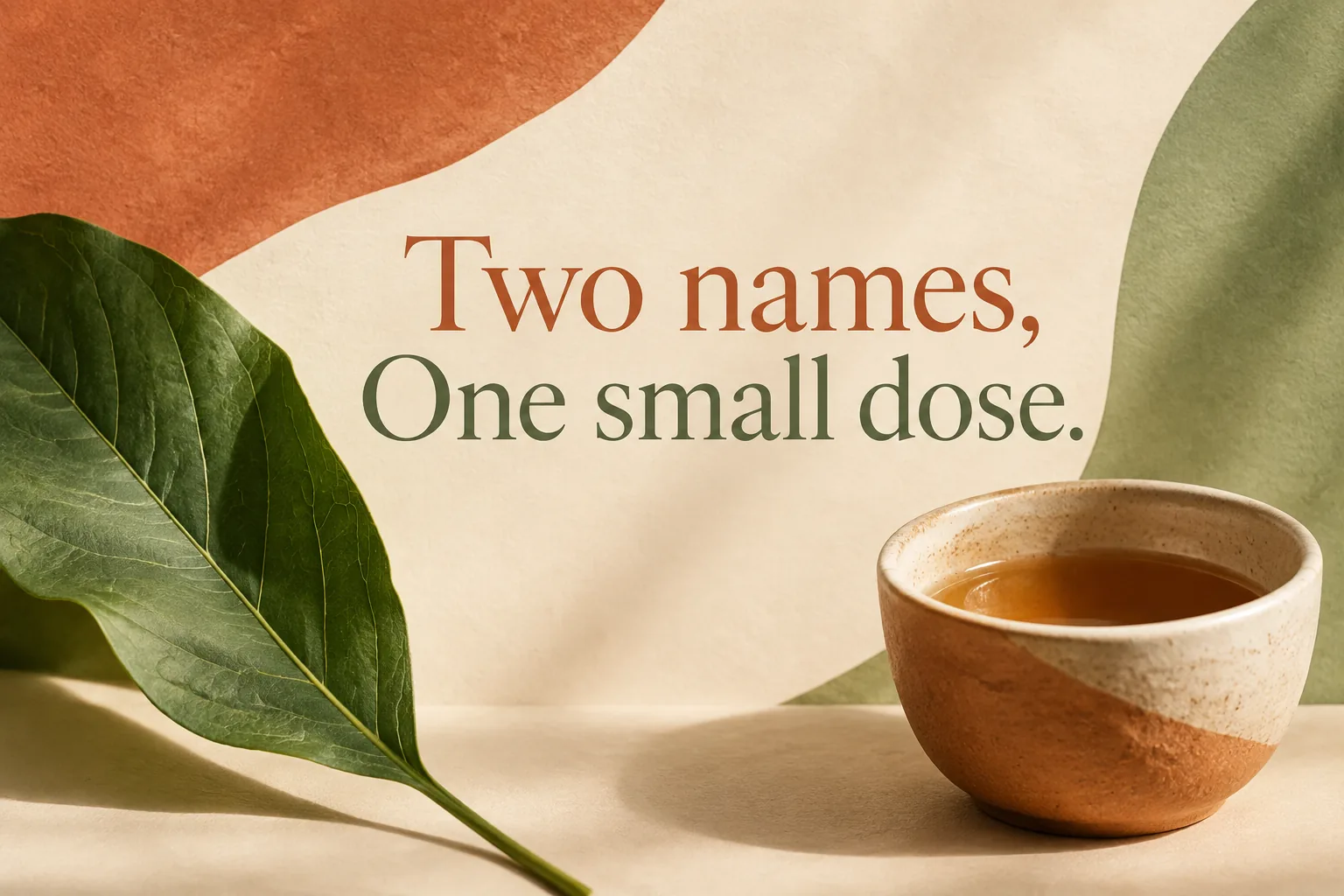
Psilocybin is like a parcel with a label on it. The parcel itself can’t do much — the label is in the way. Once you swallow it, your body’s ordinary processing clips the label off.
What’s left is psilocin, and that’s the parcel opened. Psilocin is the form that circulates and interacts with the brain. The conversion happens quickly, which is part of why the timeline feels the way it does: you swallow psilocybin, and before long your brain is dealing with psilocin.
None of this requires any special state or setting. It’s the same process whether the amount is large or barely there.
The body doesn’t distinguish between an occasion and a routine. It does the same conversion and moves on. What changes with the amount is the size of the effect, not the shape of it.
People sometimes assume a tiny amount of a psychedelic must feel like a diluted trip — a little wobbly, a little strange, just smaller. That isn’t how it comes across for most people who microdose.
Because the psilocin from a small amount is modest relative to what a full dose delivers, the experience tends to stay under the threshold where perception shifts. The conversion still happens; the result is simply subtle enough to live with, and often subtle enough that people forget they’ve taken anything at all until they notice their afternoon went a bit more smoothly than usual.
There’s a practical point in this chemistry, too. Since psilocybin is the stable, storable form — the one in the mushroom itself — it’s the form people measure and portion. The body handles the rest on its own schedule.
You don’t need to manage the psilocin side of things at all. You measure psilocybin, and your body reliably produces what it produces from it.
This is where the two names matter most. A full dose of psilocybin — enough to produce a marked psychedelic experience — doesn’t fold into a workday, a school run, or a dinner with your parents. It asks for time, a safe setting, and usually a companion or two.
It’s an occasion.
There’s nothing wrong with occasions, but they don’t repeat every third morning.
A microdose is the other thing entirely. It’s an amount small enough that the day remains the day: you drive, you work, you talk to people, you make lunch, you notice nothing unusual.
The reported benefits people describe — steadier mood, clearer thinking, as referenced in that published research on microdosing and mood — are the kind you notice in hindsight rather than in the moment. A colleague comments that you seem calmer. A project that usually drags gets finished.
The afternoon slump arrives late, or softly, or not at all.
Because the dose stays small, the routine stays sustainable. Most people who settle into microdosing do it on a schedule rather than daily — a day on, a couple of days off, or some other rhythm that suits them. If you’re curious how people structure that, our dosing guide walks through the common approaches without pushing you toward any single one.
There’s a Canadian angle worth naming. Interest in psilocybin has grown a great deal in this country, and the retail landscape has grown along with it — some shops operate with licensing of various kinds, and some don’t, and the situation continues to evolve. Health Canada’s page on magic mushrooms and the law is the reference to check for the current federal position.
The rules and the reality on the ground don’t always line up neatly, and it’s worth knowing which is which.
What keeps people with a microdosing routine, in most tellings, is the ordinariness of it. There’s no disruption to account for, no lost day, no need to explain anything to anyone. You take a small measured amount in the morning, and you get on with things.
Some people like to pair their routine with something complementary — a blend such as our Passion, for instance, which some customers use alongside a microdose for added lift in their day. That’s a personal choice, and a gentle one.
On the state of the evidence: much of what’s reported comes from people’s own accounts, and self-reports carry limits — people notice what they expect to notice, sometimes. The research community is still working to understand who benefits, by how much, and why.
That’s a reason to stay honest about what a microdose is and isn’t, and to keep your doctor in the loop about anything you’re taking. It isn’t a reason to dismiss the many Canadians who describe real, sustained improvements in how their days feel.
Is a microdose enough to actually feel something?
Most people don’t feel it in the moment, and that’s by design. The point of a microdose is to stay below the threshold where perception changes. What people tend to notice is the shape of their day — a steadier mood, an easier time starting tasks — rather than any sensation they could point to. If you can clearly feel it, you’ve likely taken more than a microdose, and you can simply take less next time.
What’s the difference between psilocybin and psilocin, in one line?
Psilocybin is what’s in the mushroom; psilocin is what your body turns it into, and it’s psilocin that meets the brain. You swallow one, your body produces the other.
Is psilocybin legal in Canada?
Psilocybin remains a controlled substance under federal law, though enforcement and access pathways have shifted in recent years. Health Canada maintains a page on magic mushrooms that states the current position, and that’s the best source for where things stand. Retail availability in Canada varies, and shops operate under differing circumstances.
I take a prescribed medication or I’m in therapy. Should I stop?
No — don’t stop anything that’s been prescribed to you, and don’t change a therapy plan on your own. If you’re thinking about adding a microdosing routine, bring it up with your doctor or therapist first. Some medications interact with psilocybin in ways that matter, and a prescriber can help you sort out what’s sensible for your situation. Stopping a medicine abruptly can cause real harm, and that’s a decision nobody should make solo.
Can I microdose on a regular workday?
Yes — that’s more or less the point. A microdose is sized to fit inside an ordinary day without changing what you can safely do. People drive, work, parent, and socialize on their routine days. That said, your first few times are best kept on the gentler side of your schedule, just so you know how you personally respond before you stack it with a big meeting or a long drive.
Do I need to microdose every day?
Most people don’t. The common routines build in regular days off, partly because tolerance builds with daily use and partly because a couple of off days each week helps people tell the difference between the routine’s effect and an ordinary good day. Our dosing guide covers the usual rhythms if you want to see how people structure a week.
Is microdosing a cure for anything?
No, and anyone who tells you otherwise is overselling. What’s reported are improvements in how days feel — mood, focus, a general sense of steadiness — in some people, some of the time. If you’re dealing with a diagnosed condition, a microdosing routine is something to discuss with a healthcare provider as a complement to proper care, never as a replacement for it.
What if I try it and notice nothing?
It happens, and it doesn’t necessarily mean anything is wrong. Responses vary from person to person, and routines sometimes take a few weeks before people feel they can fairly judge them. Some people conclude microdosing isn’t for them, and that’s a perfectly reasonable outcome. The practice asks very little of you — a small amount, a simple schedule — so finding out where you stand doesn’t ask much either.
Comments
There are no comments yet.