

Your cart is empty
Looks like you haven't made your choice yet
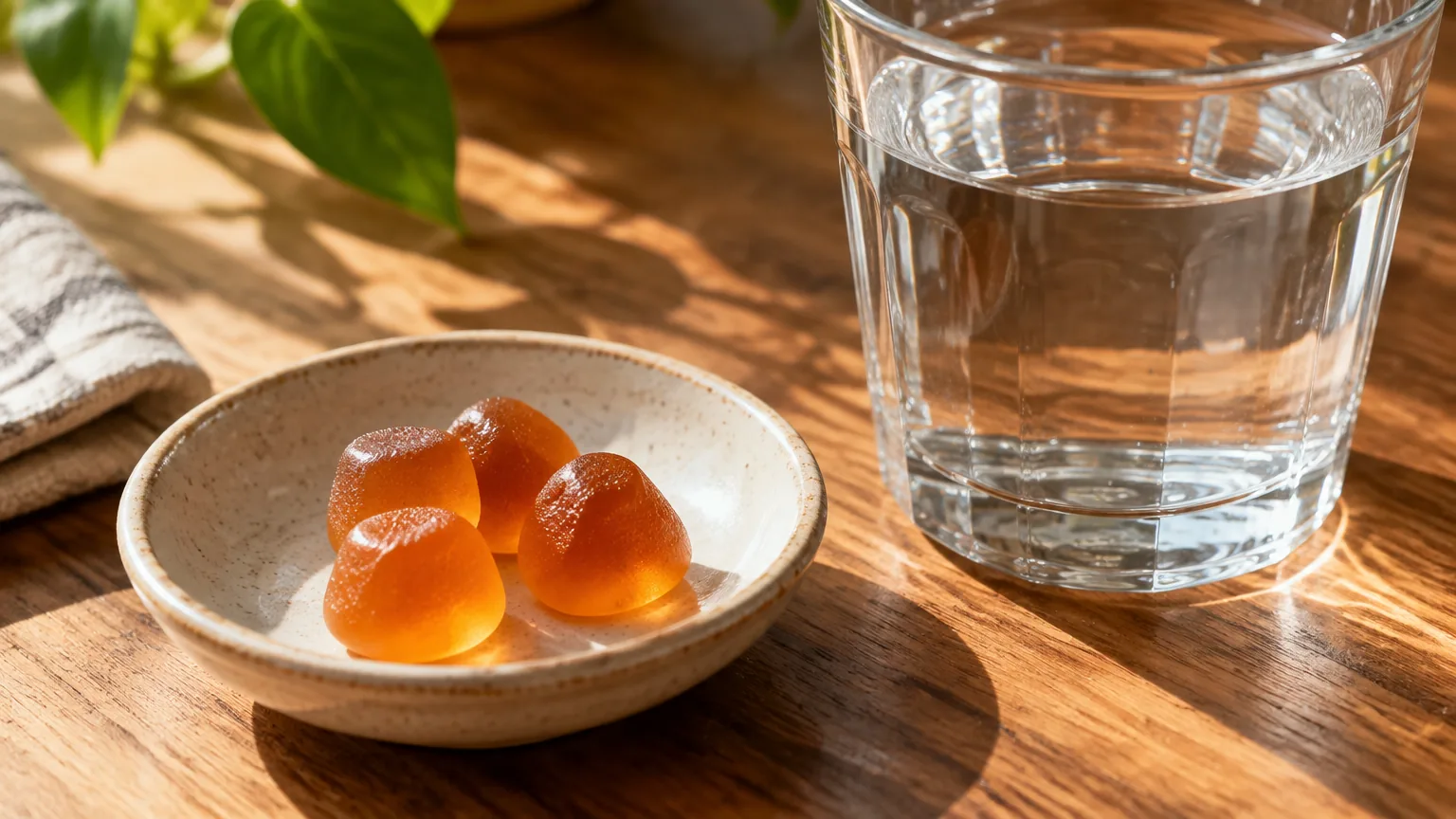
A gummy has quietly become one of the more ordinary ways to take an ordinary-day microdose: a small, set amount of psilocybin in a form that tastes better than dried mushrooms, and built on the same idea as a capsule.
When researchers ask people why they microdose, mood sits among the most commonly reported reasons. People describe taking tiny, sub-perceptual amounts hoping to feel steadier, lighter, and more even across the day (a study in Scientific Reports found mood among the leading motivations people give).
A gummy doesn’t change that idea. It just changes how it arrives.
This article covers what a microdose gummy is, why flavour and a set amount matter, what people hope to notice over a routine, and how to tell a psilocybin gummy apart from other products that only say “mushroom” on the label.
A microdose gummy is a chewable edible made with a measured, small amount of psilocybin — the same compound people take in capsule form.
The concept is identical to a capsule: a fixed, pre-measured amount in a convenient format. The difference is texture and taste. Instead of swallowing a pill, you’re chewing something soft, fruit-flavoured, and easy to keep in a drawer or a bag.
The word doing the heavy lifting here is “micro.”
A microdose is meant to sit below the threshold of a noticeable psychedelic experience. People who microdose aren’t setting aside a day for it. They take a small amount in the morning and go to work, take a walk, make dinner, help with homework. It’s woven into the ordinary day rather than replacing it.
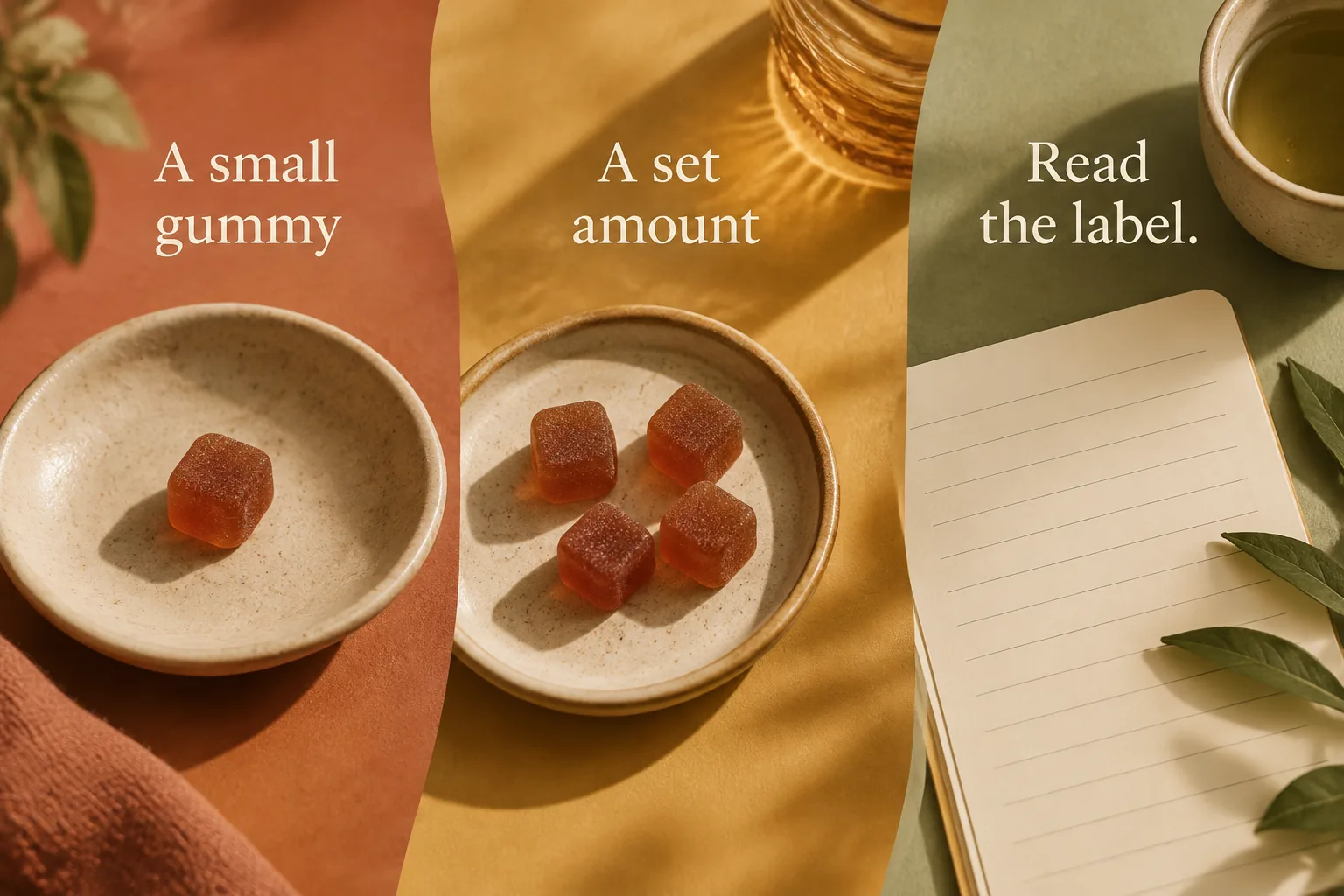
That’s the point of the format: a set amount, taken as part of a routine, small enough that the day carries on.
Because the amount is fixed, a gummy removes most of the guesswork that comes with dried material. There’s no breaking, weighing, or wondering whether today’s portion matches yesterday’s. Each gummy is made with a set amount, so every day of a routine starts from the same place.
If you’re new to the idea, our dosing page walks through how people structure a microdosing routine and what the words on a label actually mean.
Dried mushrooms taste like what they are. Earthy, sometimes bitter, occasionally compared to old cardboard by people who are being polite.
That taste is one of the quiet reasons capsules became popular — they skip the tongue entirely. A gummy takes the opposite approach. Instead of hiding the flavour, it replaces it.
Fruit-forward, sweet, something you’d genuinely choose to chew on a Tuesday morning.
Flavour sounds like a small thing, but a routine is only as strong as its easiest step. When something is pleasant to take, the routine tends to hold. When it’s a chore — or a flavour you have to brace for — the routine tends to fray.
That’s true of vitamins, coffee, and anything else taken daily. A gummy that tastes good simply makes the habit easier to keep.
The set amount matters more than the flavour, though, and the two work together. A consistent, measured amount means you can actually compare one week to the next. If a routine is going to be tracked — and most people who microdose for any length of time do start tracking — consistency is what makes the tracking mean anything.
A gummy made with a fixed amount gives you that floor: same starting point, same format, same day shape.
Our Passion and Daydream gummies are built around this pairing — a flavour people enjoy chewing and a set amount in every piece, so the routine stays simple and the days stay comparable.
The most commonly reported reason people give for microdosing is mood. In the research noted above, people described reaching for very small amounts hoping for a steadier, more even emotional baseline — fewer dips, less heaviness, a little more room in the day.
That’s a hope, not a promise, but it’s the hope that shows up again and again when people are asked why they started.
Mood isn’t the only thing people mention. Some microdose hoping for sharper focus or an easier time settling into deep work. Others describe wanting more presence — being less scattered in conversation, more absorbed in a walk, more patient by late afternoon.
Creative work comes up often too: people talk about feeling less stuck, or finding ideas connect a little more freely. And some simply describe wanting their energy to hold its shape across the day instead of peaking and collapsing.
What people actually notice varies. Some report feeling the differences within a couple of weeks of a routine; others say the changes were so gradual they only became clear when they looked back.
Many people keep a simple journal through a routine — a line or two a day about mood, focus, and energy — because a slow shift is hard to see from inside a single afternoon and much easier to see across a month of notes.
It’s worth keeping expectations modest. The research on microdosing is still early, reports are largely self-described, and what one person notices another may not. None of this is a cure for anything, and it isn’t a replacement for care.
If you’re working with a doctor or therapist, that’s a conversation worth having — not instead of anything, and certainly not a reason to stop a prescribed medicine or pause therapy on your own. Many people bring microdosing into an ongoing care conversation rather than around it.
Not every gummy sold online that says “mushroom” contains psilocybin.
A growing number of products are made with Amanita muscaria — the red-capped mushroom with white spots from storybook illustrations — whose active compound, muscimol, is entirely different from psilocybin. Some retailers lean on that ambiguity on purpose: “mushroom gummy” reads as one thing, and the fine print says another.
The name on the label matters. A psilocybin gummy and an amanita gummy are different products with different compounds and a different feel, even when they sit on the same shelf and cost about the same.
Before anything else, read the ingredient list and the front of the package. If a product doesn’t clearly name psilocybin — or if it leans on vague words like “mushroom extract” without saying which mushroom — that’s a question worth answering before it’s a gummy worth chewing.
One more honest note: in Canada, unauthorized production, sale, and possession of psilocybin products are illegal. Shops selling mushroom products may or may not be licensed, and the online marketplace mixes both.
You can read Health Canada’s own page on magic mushrooms and the law for the official wording.
Knowing what a product is and where it stands legally is part of being a careful adult about any substance, psilocybin included.
Is a microdose gummy the same as a microdose capsule?
In concept, yes. Both deliver a small, pre-measured amount of psilocybin, and both are built around the idea of a routine with a consistent starting point. The differences are practical: a gummy is chewed, tastes of fruit, and doesn’t need water. Which one suits you is mostly a matter of taste and convenience — the underlying idea is identical.
How much psilocybin is in a microdose gummy?
A microdose is a small fraction of a full recreational amount — small enough that the goal is staying below the threshold of a noticeable experience. Exact amounts vary from product to product, which is exactly why the set amount on the label matters. Read it before your first day, and our dosing guide covers how people think about amounts and routines.
Will a microdose make me feel high?
Not if it’s a true microdose — that’s the definition, not a marketing line. A microdose sits below the level of a psychedelic experience. Most people describe their day as ordinary, perhaps a touch smoother or clearer. If a dose ever feels strong or obvious, it was more than a microdose, and the honest answer is to adjust down rather than push through.
What’s the difference between psilocybin gummies and amanita gummies?
They’re made from different mushrooms with different active compounds. Psilocybin gummies contain psilocybin; amanita gummies contain muscimol from Amanita muscaria. The two aren’t interchangeable, and they don’t produce the same experience. The front of the package and the ingredient list should name the mushroom — if they don’t, treat that as the answer.
Are psilocybin gummies legal in Canada?
Unauthorized production, sale, and possession of psilocybin products are illegal in Canada. Health Canada’s page on magic mushrooms sets out the current legal status, and it’s the right primary source for the question.
Can I microdose while taking prescribed medication or seeing a therapist?
Don’t stop any prescribed medicine or pause therapy to microdose — nothing in this article suggests that, and stopping care on your own is rarely a good idea. If you’re prescribed medication or working with a therapist, bring microdosing into that conversation. A provider who knows your full picture is in a far better position than a website to help you think it through.
Comments
There are no comments yet.